A burning sensation can make even ordinary moments – reading a message, driving home, helping with homework, or wearing contacts – feel uncomfortable. If you are asking, “why do my eyes burn?”, the answer is often dry eye, irritation, or allergies. But persistent burning can also be a sign that your eyes need more personalized attention.
The good news is that burning eyes are common, and many causes can be managed effectively. The key is noticing when symptoms happen, what seems to trigger them, and whether they are accompanied by redness, discharge, vision changes, or pain.
Why Do My Eyes Burn? Start With Your Tear Film
Healthy eyes depend on a thin, protective layer of tears. This tear film does more than make your eyes feel moist. It keeps the surface of the eye smooth, washes away small particles, supports clear vision, and helps guard against irritation.
When there are not enough tears, or when tears evaporate too quickly, the eye surface can become dry and inflamed. Burning, stinging, grittiness, watery eyes, fluctuating vision, and the feeling that something is stuck in your eye can all follow.
It may seem strange that dry eyes can water excessively, but it happens often. When the eye surface is irritated, your eyes may produce reflex tears. These tears can overflow, yet they do not always have the balanced oils and moisture needed to keep your eyes comfortable.
Dry eye symptoms can be occasional, such as after a long day in air conditioning, or ongoing. Hormonal changes, certain medications, aging, eyelid gland concerns, and health conditions can all play a role. A comprehensive eye exam can help identify which factors are affecting you rather than relying on a one-size-fits-all solution.
Everyday Triggers That Can Cause Burning Eyes
Screens and reduced blinking
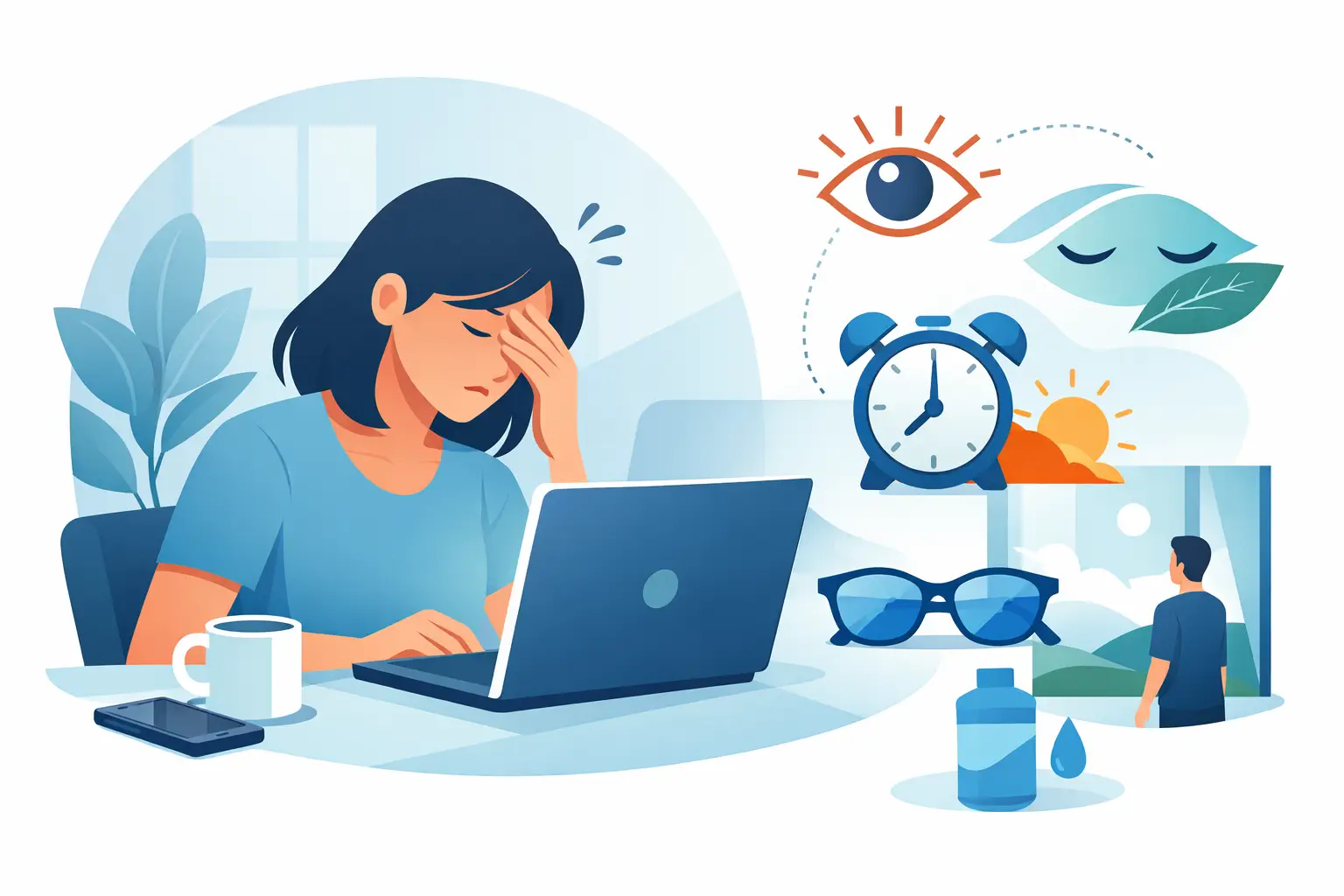
When we focus on a computer, tablet, phone, or television, we tend to blink less completely. That leaves tears sitting on the eye surface longer, where they can evaporate. A few hours of screen time may leave your eyes feeling tired, hot, dry, or blurry by late afternoon.
Take regular visual breaks and make a conscious effort to blink fully. Adjusting your screen so it sits slightly below eye level can also help because your eyelids cover more of the eye surface.
Dry air, wind, smoke, and indoor irritants
Forced-air heating, air conditioning, vehicle vents, ceiling fans, smoke, and windy weather can all speed up tear evaporation. In some cases, a change as simple as redirecting a car vent away from your face can make a noticeable difference.
If you spend time outdoors, wraparound sunglasses can offer helpful protection from wind and airborne irritants. At home, a humidifier may improve comfort when indoor air is especially dry.
Allergies
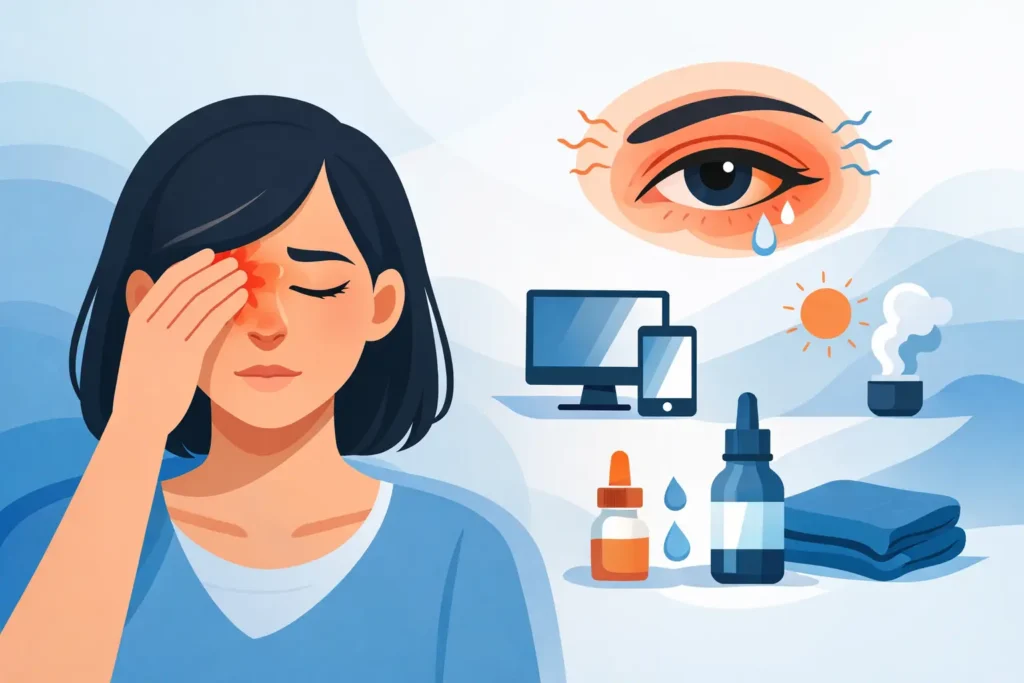
Seasonal pollen, dust, pet dander, and other allergens can cause burning along with itching, watering, redness, and puffy eyelids. Itching is a particularly common clue that allergies are involved.
Try not to rub your eyes, even when they are very itchy. Rubbing can worsen irritation and may make symptoms linger. Cool compresses can feel soothing, and an eye doctor can recommend allergy treatments that fit your symptoms and eye health needs.
Contact lenses
Contacts should feel comfortable. If they regularly burn, sting, or feel dry, do not assume discomfort is simply part of wearing lenses. Lens material, replacement schedule, cleaning habits, fit, solution sensitivity, and dry eye can all affect comfort.
Remove your lenses if your eyes become painful, very red, or unusually sensitive to light. Do not sleep in contact lenses unless your eye doctor has specifically prescribed lenses approved for overnight wear. Replacing lenses on schedule and using the recommended care system are small habits that can protect both comfort and eye health.
Makeup, skin care, and eyelid irritation
Products used around the eyes can sometimes contribute to burning. Makeup residue, expired cosmetics, lash products, facial cleansers, and skin care ingredients can irritate the delicate eyelid area or interfere with the tiny oil glands along the eyelid margins.
These glands produce oil that helps keep tears from evaporating too quickly. When they are blocked or not working well, dry eye symptoms can become more noticeable. Gentle eyelid hygiene may help, but the right approach depends on the cause. Avoid putting drops, cleansers, or home remedies directly in your eyes unless they are made for that purpose.
When Burning Eyes May Need Prompt Care
Most mild irritation is not an emergency, but some symptoms should not wait. Arrange urgent eye care if burning comes with significant pain, a sudden change in vision, marked light sensitivity, an eye injury, chemical exposure, or a feeling that something is lodged in the eye.
Thick discharge, eyelids stuck together after sleep, increasing redness, or swelling may point to an infection or other condition that needs an evaluation. People who wear contact lenses should be especially careful with red, painful eyes because contact lens-related infections can become serious quickly.
If a chemical splashes into your eye, rinse the eye immediately with clean, lukewarm water for at least 15 minutes. Remove contact lenses while rinsing if they come out easily, then seek urgent medical guidance. Do not try to neutralize the chemical with another product.
Burning that keeps returning, lasts more than a few days, or interferes with work, sleep, driving, or reading is also worth an appointment. Your eyes do not need to be in crisis before you ask for help.
Practical Steps for More Comfortable Eyes
For mild burning that seems related to dryness or daily irritation, start with gentle changes. Use preservative-free artificial tears if they have been recommended for you, especially if you need drops frequently. Unlike redness-relieving drops, lubricating drops are designed to add moisture rather than temporarily whitening the eyes.
A warm compress can be helpful for some people with eyelid oil gland blockage or evaporative dry eye. Use a clean, comfortably warm washcloth over closed eyes for several minutes, not a hot cloth that could irritate your skin. Follow with gentle eyelid cleaning only if your eye care provider has suggested it.
Your routine matters too. Stay hydrated, take screen breaks, get enough sleep, and avoid directing fans or vents toward your face. If you use contacts, give your eyes regular breaks with glasses when they feel dry. These habits may not solve every cause of burning, but they can reduce the daily strain that keeps symptoms going.
Be cautious with eye drops marketed primarily to “get the red out.” Some can create rebound redness when used too often and do not address the reason your eyes feel irritated. If you are unsure which drops are appropriate, ask before adding another product to your routine.
An Eye Exam Can Find the Cause Behind the Burn
Burning is a symptom, not a diagnosis. During an eye exam, your optometrist can assess the health of your eye surface, tear quality, eyelids, oil glands, prescription, contact lens fit, and other factors that may be contributing to discomfort.
That matters because treatment is not identical for everyone. One person may benefit from targeted dry eye care, while another may need allergy support, a contact lens adjustment, eyelid treatment, or care for an underlying eye condition. A personalized plan can be far more helpful than cycling through drops without knowing what is causing the problem.
At 4 Eyes Optometry, we take the time to understand how symptoms show up in your day-to-day life – whether your eyes burn after screen time, outdoors, while wearing contacts, or first thing in the morning. That context helps guide care that feels practical, comfortable, and suited to you.
Your eyes work hard for you every day. If burning has become part of your routine, a thoughtful eye health visit can be a simple next step toward feeling more comfortable and seeing clearly again.