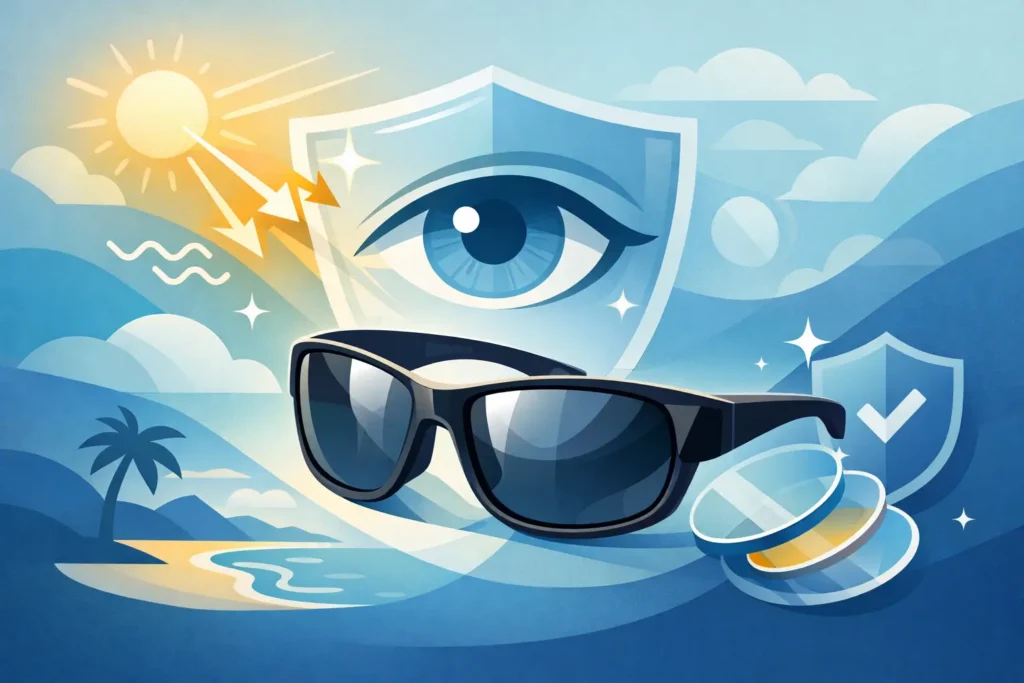
A bright afternoon on the water, a drive home with the sun low in the sky, or a family day at the park can leave your eyes feeling tired and strained. The best sunglasses for eye protection do more than make a sunny day more comfortable. They help shield your eyes and the delicate skin around them from ultraviolet exposure while giving you clearer, more relaxed vision.
Choosing a pair can feel surprisingly complicated. Lens color, frame style, polarization, prescription options, and price all come into play. The good news is that the most important features are straightforward once you know what to look for.
What Makes the Best Sunglasses for Eye Protection?
Start with ultraviolet protection. Look for sunglasses labeled 100% UVA and UVB protection or UV400. This means the lenses block ultraviolet rays across the range that matters for eye safety. Both labels are commonly used to indicate comprehensive UV coverage.
UV exposure adds up over time, including on days that do not feel especially hot or sunny. Long-term exposure has been associated with eye health concerns such as cataracts and changes to the tissue on the surface of the eye. Sunglasses are one practical part of a proactive eye care routine, alongside regular comprehensive eye exams.
Do not judge protection by how dark a lens looks. A very dark lens without proper UV filtering may cause the pupil to open wider, potentially allowing more ultraviolet light to enter the eye. A lighter lens with verified 100% UVA and UVB protection is the safer choice.
Coverage matters as much as the lens label
Larger lenses and frames that sit close to the face can provide more protection from light coming in around the sides. Wraparound sunglasses are especially helpful for time on the water, snow activities, cycling, hiking, and other situations where sunlight reflects from multiple directions.
That does not mean everyone needs a sporty wrap frame. An oversized everyday frame can offer excellent coverage, too. The right choice depends on your lifestyle, facial fit, and whether the frame stays comfortably in place when you move.
Polarized Lenses: Helpful, but Not a Substitute for UV Protection
Polarized lenses reduce glare reflected from flat surfaces, including roads, water, sand, and snow. They can make driving, boating, fishing, and outdoor sports noticeably more comfortable. Many people also appreciate the improved contrast and reduced squinting during ordinary errands or walks.
Polarization and UV protection are separate features. A lens can be polarized without offering adequate UV blocking, and a UV-protective lens does not have to be polarized. Ideally, choose lenses that provide both when glare is a regular part of your day.
There are a few trade-offs. Some digital screens, dashboard displays, and instrument panels can be harder to see through polarized lenses, particularly at certain angles. If you work around specialized displays or fly aircraft, ask your eye care professional which lens option best suits those activities.
Choose Lens Material for Your Routine
The lens material affects weight, impact resistance, thickness, and cost. There is no one material that is best for every person.
Polycarbonate lenses are lightweight and impact resistant, making them a popular choice for active adults and children. Trivex lenses offer similar protective benefits with very clear optics and can be an excellent option for certain prescriptions. Standard plastic lenses may work well for lower prescriptions and everyday wear, while high-index materials can help keep stronger prescription lenses thinner and lighter.
For sports, yard work, and active family outings, impact resistance deserves special attention. Sunglasses are not the same as certified protective eyewear for every job or high-risk sport, but a durable lens material and a secure frame are wise starting points.
Lens color changes comfort, not UV protection
Gray lenses provide natural color perception and work well for general outdoor use. Brown or bronze lenses may enhance contrast, which some people enjoy for driving, golf, and variable light. Green lenses offer balanced color perception and contrast, while yellow or rose tints can be useful in specific low-light conditions.
The color that feels best is personal. What should remain non-negotiable is verified UV protection. Try on a few options outdoors if possible, because a tint that looks appealing under indoor lights may feel too dark or too warm in full sun.
Fit Is an Eye Health Feature
A pair of sunglasses only protects you when you actually wear it. Frames that pinch the nose, slide down constantly, press behind the ears, or interfere with hearing aids are likely to spend more time in a case than on your face.
A well-fitted frame should sit comfortably without slipping, keep the lenses centered in front of your eyes, and offer enough width to reduce side light. The top of the frame should not block your natural line of sight, especially for driving. If you have a strong prescription, frame selection becomes even more important because lens thickness, edge appearance, and optical alignment can vary from one style to another.
A professional adjustment can make a meaningful difference. Small changes to the nose pads, temples, or frame curve often turn a pair that feels almost right into one you reach for every day.
Prescription Sunglasses Are Worth Considering
If you need glasses to see clearly at a distance, prescription sunglasses can make outdoor life easier and safer. Wearing regular glasses under oversized sunglasses rarely provides a comfortable fit or reliable coverage. Prescription sun lenses allow your visual correction and UV protection to work together.
Single-vision prescription sunglasses are a simple option for many people. Progressive sunglasses can be helpful for adults who need distance, intermediate, and near vision throughout the day, whether they are reading a menu on a patio or checking directions while traveling. Your ideal design depends on how you use your eyes outdoors.
Photochromic lenses can be convenient because they darken in bright light. However, many do not darken as fully behind a car windshield because windshields block much of the UV light that activates them. For frequent daytime driving, a dedicated pair of prescription sunglasses may still be the more comfortable choice.
Children Need Sunglasses, Too
Children spend plenty of time outdoors, and their sunglasses should be treated as everyday protection rather than a fashion accessory reserved for vacations. Choose a pair with 100% UVA and UVB protection, impact-resistant lenses, and a comfortable fit that encourages them to keep the glasses on.
For younger children, flexible frames and an adjustable strap can help. Letting a child choose between a few parent-approved styles may also make wearing sunglasses feel more fun and less like a battle. A hat with a brim adds another useful layer of shade, especially during long outdoor play.
If your child has light sensitivity, frequent squinting, headaches, or trouble seeing in bright conditions, bring it up during an eye exam. Sometimes a different lens tint, a prescription, or treatment for an underlying concern can improve comfort.
When to Ask for Personal Advice
The best sunglasses for eye protection can look different for someone who drives daily, enjoys water sports, has dry eye symptoms, takes light-sensitive medications, or is recovering from an eye procedure. Certain eye conditions and surgeries can also change the lens features that make the most sense.
An optometrist can help you weigh those details without making the process feel overwhelming. At 4 Eyes Optometry, recommendations can be tailored to your vision, prescription, outdoor habits, and comfort preferences, so your sunglasses feel like a natural part of caring for your eyes.
Keep your sunglasses somewhere easy to reach: near the door, in a clean case in your bag, or in the vehicle. A pair you enjoy wearing is far more likely to protect your eyes through all the ordinary sunny moments that add up over a lifetime.