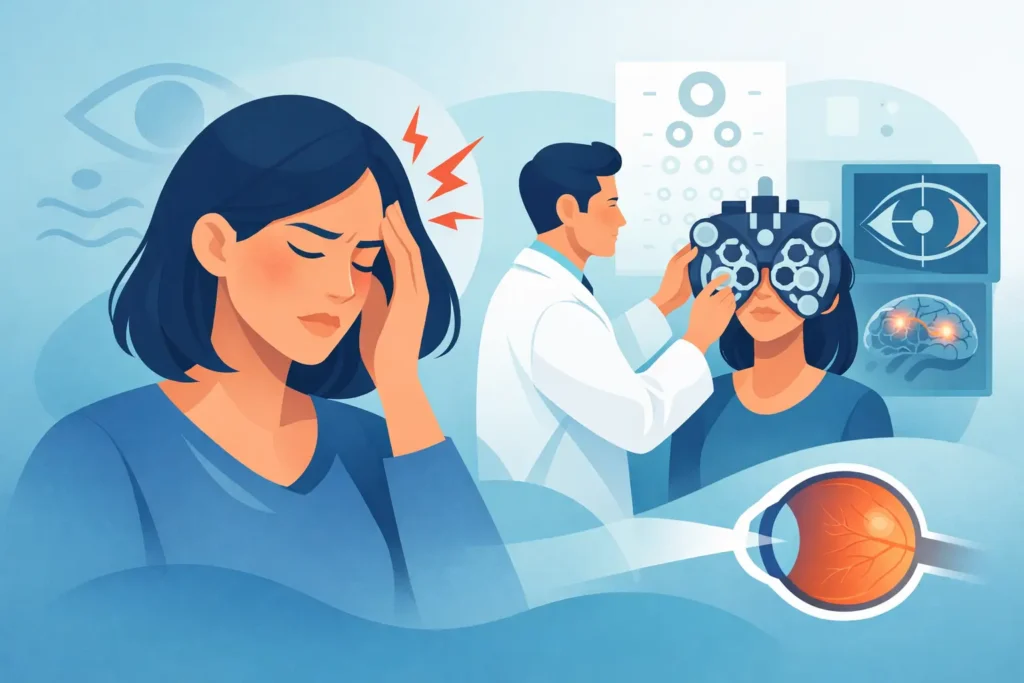
A headache that shows up after a day of computer work, reading, driving, or helping with homework is easy to dismiss as stress. But when the pattern keeps repeating, an eye exam for headaches can be a practical place to start. Your eyes may not be the only possible cause, but vision strain, focusing problems, and certain eye health concerns can all contribute to discomfort that interrupts your day.
At 4 Eyes Optometry, we take those symptoms seriously without making the visit feel overwhelming. A comprehensive exam gives us the opportunity to understand what you are feeling, how you use your eyes, and whether your vision or eye health may be part of the picture.
How Vision Problems Can Trigger Headaches
Headaches related to vision often come from effort. When your eyes have to work harder than they should to keep print clear, maintain focus at a screen, or coordinate together, the surrounding muscles can become fatigued. That strain may feel like pressure around the eyes, forehead, temples, or brow.
Even a small prescription change can matter. You may still be able to read a sign or recognize faces, yet your visual system may be compensating throughout the day. Nearsightedness, farsightedness, astigmatism, and age-related changes in near vision can each make certain tasks more demanding.
Eye coordination is another factor. For comfortable vision, both eyes need to aim, focus, and move together efficiently. If that system is under strain, close work can become tiring. Some people notice headaches after reading, others after spreadsheets or video calls, and children may complain after schoolwork even when they do not describe their vision as blurry.
Dry eyes can also play a role. When eyes feel irritated or vision fluctuates, people may squint, blink less, and work harder to see clearly. Screen use can make this worse because we naturally blink less often while concentrating.
When an Eye Exam for Headaches Makes Sense
A vision assessment is especially worthwhile when headaches seem connected to visual tasks. Perhaps they start late in the workday, appear after driving at night, or happen when you move between a phone, computer, and paper documents. You may notice tired eyes, blurred vision, sensitivity to light, frequent squinting, or a need to close one eye to feel more comfortable.
It can also be helpful if your current glasses or contact lenses are older, damaged, or no longer feel right. A prescription that once worked well may not match your current visual needs, especially as work routines, screen time, medications, health conditions, and age change.
For children, the clues can be less direct. A child might avoid reading, lose their place on a page, rub their eyes, complain that schoolwork makes their head hurt, or become unusually frustrated with close tasks. Because children often assume everyone sees the way they do, they may not mention blur unless someone asks clear, simple questions.
An exam is not a guarantee that the answer lies in your eyes. Headaches can have many causes, including stress, sleep changes, dehydration, migraines, sinus concerns, jaw tension, blood pressure changes, and other medical conditions. Still, checking vision and eye health can rule in or rule out an important contributor and give you more useful information for your next step.
What We Look for During the Exam
A headache-focused eye exam is more than a quick check of the letters on a chart. We begin by listening. Details such as where the pain occurs, when it starts, how long it lasts, whether it affects one or both sides, and which activities bring it on can help guide the assessment.
We then evaluate how clearly you see at different distances and whether your prescription needs to be updated. Clear vision matters, but comfort matters too. The goal is not simply to find the strongest lens you can read with. It is to find a prescription that supports the way you actually use your eyes.
Your optometrist may also assess focusing ability, eye alignment, eye movements, and how your eyes work together. These tests can reveal whether close work is putting extra demand on your visual system.
A comprehensive exam also includes a look at the health of your eyes. We check for dry eye signs and evaluate structures inside and outside the eye. In some cases, headaches and eye discomfort may be associated with eye pressure concerns, inflammation, or other conditions that need medical attention or co-management.
What Happens If Your Eyes Are Part of the Problem?
The right solution depends on what the exam shows. Sometimes a new glasses prescription is enough to make reading, driving, or screen use noticeably more comfortable. Other times, task-specific lenses may be worth discussing. A pair designed for computer distance, for example, can be useful for someone who spends much of the day at a monitor, but it may not be the best all-purpose choice for driving or distance vision.
If dry eye is contributing, a personalized treatment plan may help improve comfort and visual stability. The best approach depends on the type and severity of dryness, your environment, your health history, and how often symptoms occur.
For contact lens wearers, the fit, material, wearing schedule, and lens prescription can all affect comfort. A lens that is technically acceptable may still not feel ideal after hours of wear. Small adjustments can make a meaningful difference.
If your eye exam is normal and your symptoms do not appear vision-related, that is useful information too. Your optometrist can help you understand when to follow up with your primary care provider or another health professional. Good care is not about forcing every symptom into an eye-related explanation. It is about helping you find the most appropriate path forward.
Small Habits That Can Reduce Visual Strain
While you wait for your appointment or alongside a treatment plan, a few everyday adjustments may ease strain. Take regular breaks from close work by looking across the room or out a window for a short time. Position screens about an arm’s length away, with the top of the monitor at or slightly below eye level. Reduce glare where possible, and avoid working in a very dark room with a bright screen.
Remember to blink fully when using digital devices. This sounds simple, but it can be surprisingly difficult when you are absorbed in a task. If you wear glasses, keep the lenses clean. Smudges, glare, and scratches can all make your eyes work harder.
Good lighting helps, but brighter is not always better. The goal is comfortable, even light for the task in front of you. A reading lamp can help with books and paperwork, while excessive overhead glare may make screens less comfortable.
Headache Symptoms That Need Urgent Attention
Most headaches are not an eye emergency, but certain symptoms should never wait for a routine appointment. Seek urgent medical care or contact emergency services if a headache is sudden and severe, feels unlike anything you have experienced before, or comes with new vision loss, double vision, weakness, numbness, confusion, fainting, trouble speaking, fever with neck stiffness, or severe eye pain and redness.
Prompt assessment is also important for flashing lights, a sudden shower of floaters, or a dark curtain or shadow in your vision. These symptoms may not be the cause of a headache, but they can signal an urgent eye concern.
You do not have to decide on your own whether recurring headaches are “serious enough” to mention. If they are affecting your work, family time, school, driving, or ability to enjoy the day, they are worth a conversation. A thoughtful eye exam can offer reassurance, identify a treatable vision concern, and help your eyes feel more comfortable in the moments that matter most.