Contact lenses should feel like a natural part of your day, not a compromise you tolerate. This guide to contact lens exams explains why a contact lens visit is more than a quick prescription update and how the right evaluation can support clearer, more comfortable vision.
A glasses prescription is a helpful starting point, but it does not automatically tell us which contact lens will suit your eyes. Contacts rest directly on the surface of the eye, so their fit, material, oxygen flow, and replacement schedule all matter. A thoughtful exam helps match those details to your eye health, visual needs, and real life.
What Makes a Contact Lens Exam Different?
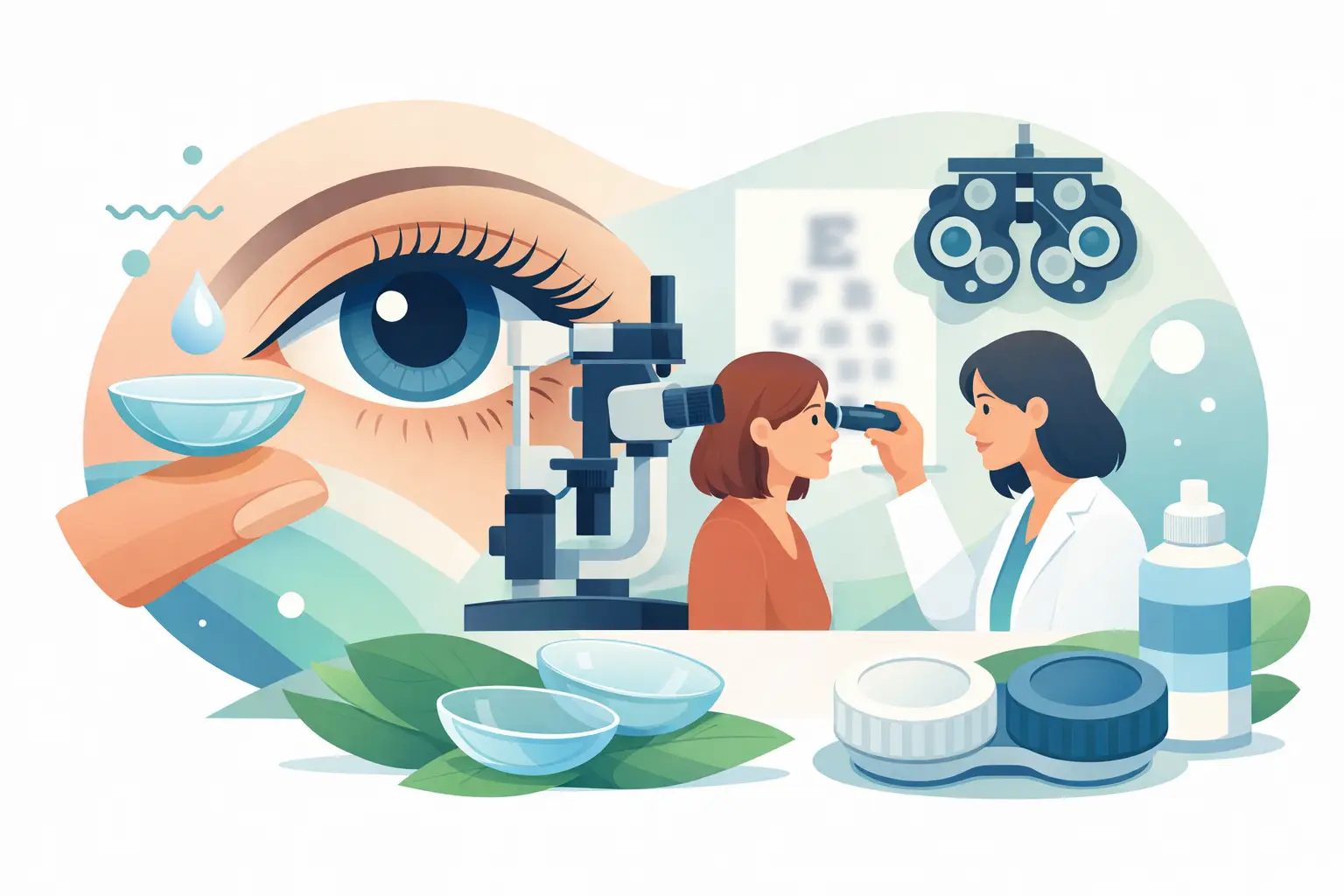
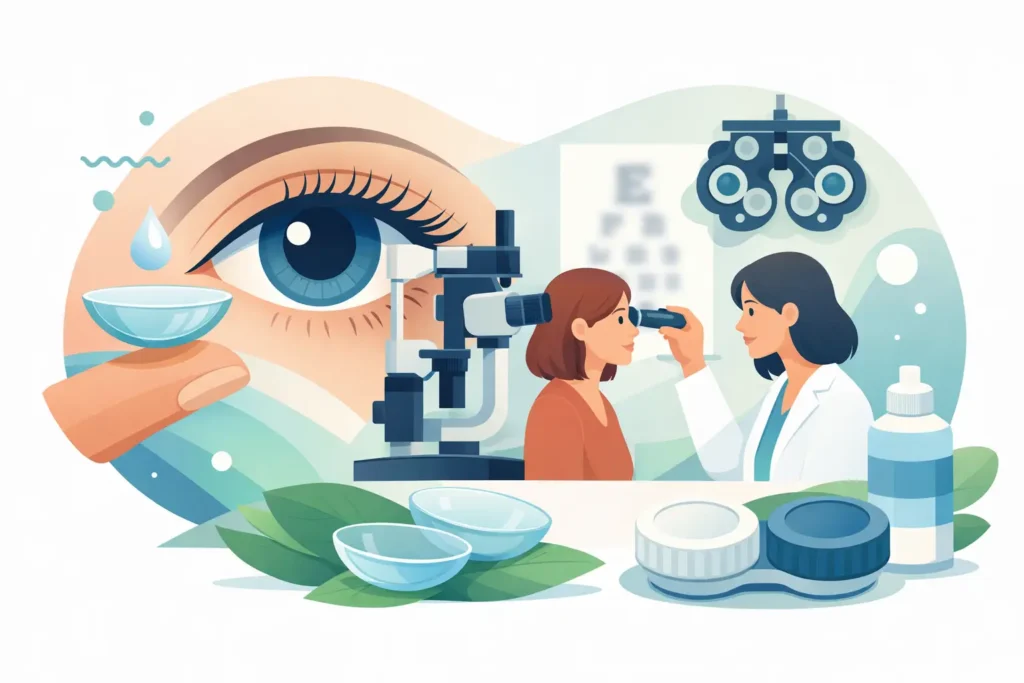
A comprehensive eye exam checks your vision and the overall health of your eyes. A contact lens exam includes that same essential care, then adds measurements and testing specifically for safe, successful lens wear.
Your optometrist evaluates the front surface of the eye, including the cornea, eyelids, and tear film. The cornea is the clear dome at the front of the eye where a contact lens sits. Its shape and curvature help determine which lens design is likely to fit well. Your tear film also matters because it keeps the eye surface smooth and helps lenses move comfortably with each blink.
The goal is not simply to find a lens that makes letters look sharp on an eye chart. It is to find an option that supports healthy, comfortable wear over time. That may mean discussing daily disposable lenses, reusable lenses, multifocal designs, astigmatism correction, or specialty options for more complex needs.
What to Expect at Your Appointment
A contact lens exam is usually relaxed and straightforward. Sharing what you experience day to day gives your optometrist useful context before any measurements begin. If your eyes feel dry by late afternoon, your vision fluctuates at a computer, or you have stopped wearing contacts because they no longer feel good, say so. Those details can guide the fitting.
A Conversation About Your Vision and Lifestyle
You may be asked how often you wear contact lenses, whether you use screens for long stretches, play sports, work outdoors, drive at night, or have seasonal allergies. Your answers help narrow the options.
For example, a parent with a busy schedule may prefer the convenience and fresh feel of daily disposable lenses. Someone who spends many hours reading or working on a screen may need a lens material or replacement schedule that better supports comfort. A person who needs help seeing both a phone and a grocery aisle may benefit from multifocal contacts. There is no single best lens for everyone.
Be open about your habits, including if you sometimes nap in lenses or wear them longer than recommended. This is not about judgment. It helps your eye care team identify risks and offer practical guidance that fits your routine.
Vision Testing and Eye Health Checks
Your optometrist will check how clearly you see and refine your prescription as needed. They will also examine the health of your eyes, looking for concerns such as dryness, allergies, inflammation, corneal changes, or signs that lenses are not getting enough oxygen to the eye.
Some eye health concerns can begin with mild symptoms, such as redness that comes and goes or eyes that feel tired at the end of the day. Others may not be obvious to you at all. Regular exams give your optometrist the chance to catch changes early and adjust your care before discomfort becomes your normal.
Measurements and Trial Lenses
Contact lens fitting measurements can include the curvature and diameter of your cornea, as well as an assessment of your tear quality. Your optometrist may then place trial lenses on your eyes and check their position, movement, comfort, and vision.
A lens should center well on the eye and move slightly with each blink. Too much movement can make vision unstable or make the lens feel noticeable. Too little movement can reduce the healthy exchange of tears beneath the lens. The right fit is a balance, and it is one reason online ordering without current professional guidance can be risky.
If the first trial lens is not quite right, that is normal. A small adjustment in material, curve, diameter, or prescription can make a meaningful difference. Your comfort is useful clinical information, so speak up if something feels scratchy, dry, blurry, or hard to focus through.
Choosing the Right Type of Contact Lens
The best option depends on your eyes, prescription, schedule, and preferences. Your optometrist can explain the trade-offs clearly, so you can make a confident decision.
Daily disposable lenses are worn once and discarded at the end of the day. They offer convenience and can be a great choice for people with allergies, occasional wearers, travelers, teens, and anyone who wants to avoid cleaning and storing lenses. They may cost more upfront than reusable lenses, but many patients value the simplicity.
Reusable lenses are replaced on a set schedule, such as every two weeks or monthly. They require careful cleaning, proper storage, and replacement on time. For some patients, they can be a cost-conscious choice, but only when lens care fits comfortably into everyday life.
Toric lenses correct astigmatism, a common condition caused by a differently shaped cornea. Multifocal lenses help address near and distance vision in one lens, often appealing to adults who are beginning to need reading help. Specialty lenses may be considered for conditions such as keratoconus, significant dryness, or irregular corneal shape. These fittings can take additional visits because precision matters.
Dry Eyes and Contact Lenses: What Can Help?
Dryness does not always mean you have to give up contacts. It does mean the cause deserves attention. Screen time, medications, allergies, hormonal changes, sleep, indoor heating, and natural changes in tear production can all contribute to dry eye symptoms.
Sometimes the answer is a different lens material or a daily disposable option. Other times, dry eye treatment should come first so the eye surface is healthier before a fitting. Artificial tears, eyelid care, allergy management, and in-office dry eye treatment may be part of a personalized plan, depending on what your exam shows.
Do not try to push through persistent burning, redness, light sensitivity, or blurred vision. Taking lenses out and arranging an eye care visit is the safer choice. Contact lenses are medical devices, and discomfort is worth investigating.
How Often Should You Book a Contact Lens Exam?
Most contact lens wearers benefit from an exam every year, even when their prescription seems stable. Annual visits allow your optometrist to monitor the cornea, tear film, and eye health while confirming that your lenses still fit and perform as they should.
Book sooner if your lenses suddenly feel uncomfortable, your vision changes, your eyes are frequently red, or you have pain, discharge, significant light sensitivity, or a new sensation that something is in your eye. Painful red eyes in a contact lens wearer should be assessed promptly. Remove your lenses and do not wear them again until you have received professional advice.
Children and teens who wear contacts also need regular follow-up. With the right support, many young patients do very well with lenses, especially for sports and active days. Good habits around handwashing, replacement schedules, and never sleeping in lenses unless specifically prescribed can protect their eyes for years to come.
Arrive Prepared for a More Useful Visit
Bring your current contact lens boxes or take a clear photo of the labels. This gives your optometrist the exact brand, power, base curve, diameter, and replacement schedule you are using. If you wear glasses, bring those too.
If possible, wear your contacts to the appointment unless the clinic gives you different instructions. Seeing how your current lenses sit on your eyes can be helpful. It is also wise to bring glasses, since your eyes may be dilated during a comprehensive exam or you may need to remove your lenses for testing.
Write down questions before you arrive. You might ask whether your current lenses are still the best fit, whether daily lenses could ease dryness, or whether there is an option that better supports reading and distance vision. A good contact lens exam leaves room for those practical conversations.
At 4 Eyes Optometry, the focus is on helping you feel informed and comfortable with your choices, not rushed into a one-size-fits-all solution. Clear vision is wonderful, but healthy eyes and comfortable wear are what make contact lenses a reliable part of your routine.