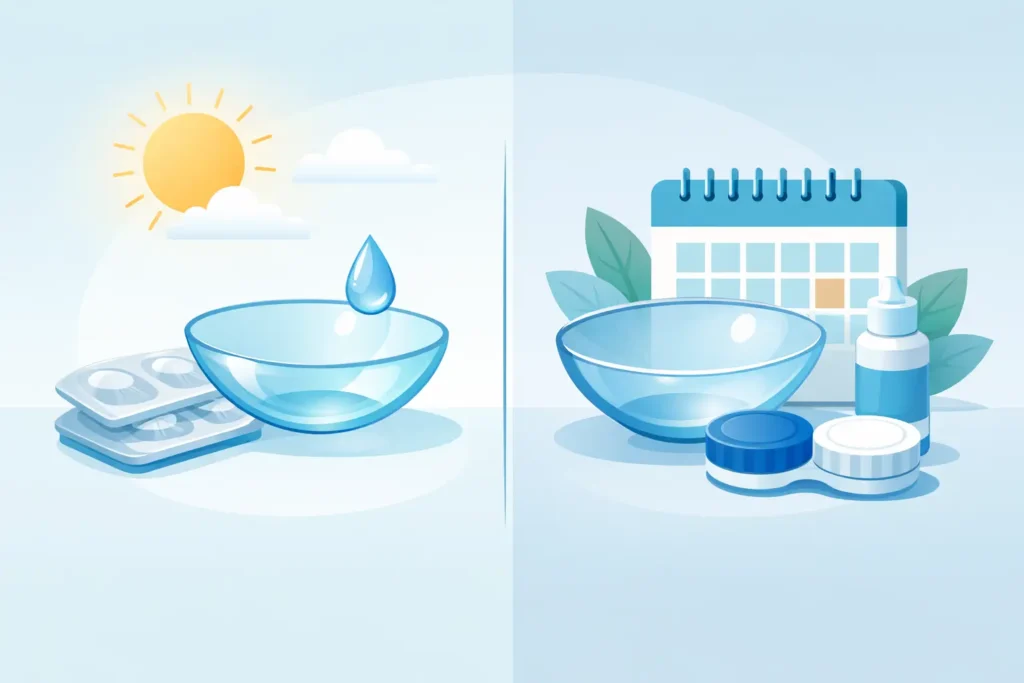
If you have ever stood at the point of choosing between daily vs monthly contact lenses, you already know it is not really a small decision. The right lens can make your day feel easy and comfortable. The wrong one can leave you dealing with dryness, irritation, or a routine that never quite fits your life.
For many people, the best choice is not about which option is “better” overall. It is about which option works better for your eyes, your schedule, and how consistently you want to care for your lenses. That is why contact lens recommendations should feel personal, not one-size-fits-all.
Daily vs monthly contact lenses: what is the difference?
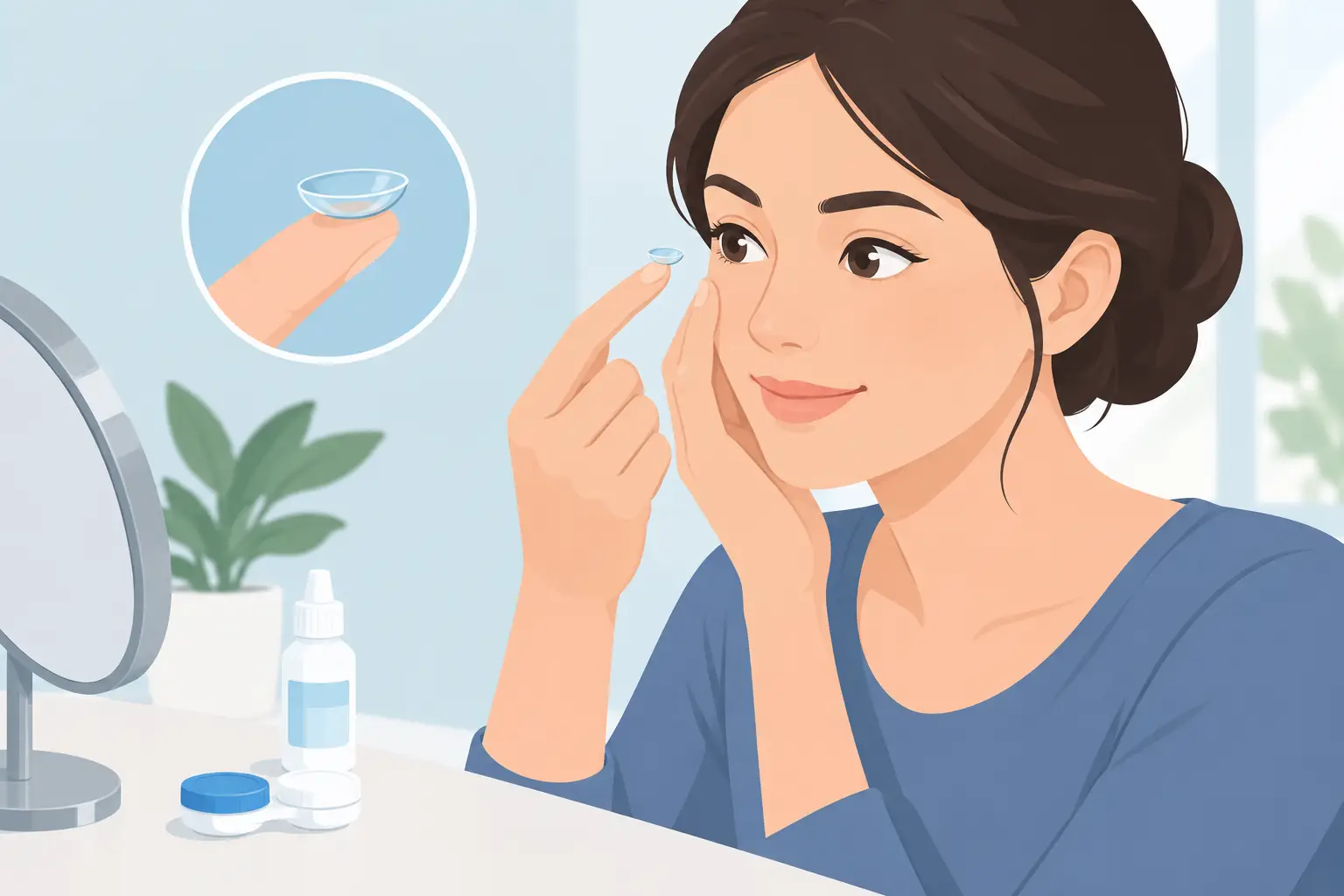
Daily contact lenses are worn once and then thrown away at the end of the day. You open a fresh pair in the morning, wear them during the day, and discard them before bed. There is no cleaning, storing, or reusing.
Monthly contact lenses are designed to be worn repeatedly for up to 30 days, depending on the specific lens and your doctor’s instructions. You take them out each night, clean and disinfect them properly, and store them in fresh solution.
That sounds simple enough, but the day-to-day experience can be quite different. Daily lenses tend to feel more convenient and low maintenance. Monthly lenses can be more economical in some situations, but they ask more of you in return. The trade-off usually comes down to convenience, comfort, hygiene habits, and budget.
Comfort often depends on your eyes, not just the lens schedule
A lot of patients assume daily lenses are automatically more comfortable, and in many cases, they are. Because you start each day with a fresh lens, there is less time for protein deposits, debris, and allergens to build up on the surface. That can make a meaningful difference for people with allergies, mild dry eye symptoms, or sensitive eyes.
Monthly lenses can also be very comfortable, especially when they are fitted properly and cared for consistently. Some people do very well with them and enjoy stable vision and comfort throughout the month. But if lens care slips, even a little, comfort often drops quickly. A lens that is overdue for replacement or not cleaned well can start to feel dry, filmy, or irritating.
This is where a proper contact lens exam matters. Your tear film, corneal shape, prescription, and history of dryness all affect how a lens will perform. A lens that works beautifully for one person may not be the right fit for someone else.
Hygiene is where daily lenses have a clear advantage
When people ask about safety, daily disposable lenses usually come out ahead. There is less handling, no storage case to keep clean, and no risk of stretching a lens beyond its intended replacement schedule. Fewer steps means fewer chances for contamination.
Monthly lenses can still be a healthy option, but they require consistent care. That means washing and drying your hands before handling them, rubbing and rinsing lenses if recommended, using fresh solution every time, and replacing the case regularly. Sleeping in lenses when you should not, topping off old solution, or wearing them longer than directed can raise the risk of irritation and infection.
For busy adults, teens, or anyone who knows routines can get rushed, that difference matters. Daily lenses are often the easiest choice for people who want to keep things simple and lower the chances of avoidable problems.
Daily vs monthly contact lenses for cost
Cost is often the first question, and it is a fair one. At first glance, monthly lenses can look less expensive because you are not opening a brand-new pair every day. But the real cost picture is a little more nuanced.
Monthly lenses also require cleaning solution, a storage case, and dependable replacement habits. If a lens gets torn or lost early in the month, that can add to the expense. Daily lenses have a higher per-box cost, but there are no care products to buy and no hidden upkeep.
Your wearing schedule changes the math too. If you wear contacts every single day, monthly lenses may be more budget-friendly in some cases. If you only wear contacts a few days a week and use glasses the rest of the time, daily lenses can actually make more sense because you only use what you need.
The cheapest option is not always the best value if it leads to discomfort, poor compliance, or more visits for preventable irritation. A good recommendation balances affordability with eye health and realistic habits.
Lifestyle matters more than people expect
Choosing between daily and monthly lenses is often easier once you think about your routine.
If your days are busy and unpredictable, daily lenses are hard to beat. They are great for travel, long workdays, sports, social events, and anyone who wants as little fuss as possible. There is no need to pack solution for a late night out or remember whether your case was cleaned properly.
Monthly lenses may suit people who are comfortable with a routine and do not mind the added care steps. If you are organized, wear your lenses most days, and are consistent about cleaning, they can be a practical option.
Parents sometimes ask which is better for teens. In many cases, daily lenses are a very strong choice because they simplify the process and reduce the chance of shortcuts with cleaning. That said, some teens are very responsible and do well with monthlies. It depends on maturity, habits, and support at home.
Allergies, dry eye, and screen-heavy days
This is one of the most important parts of the conversation. If you struggle with seasonal allergies, dry eye symptoms, or long hours on screens, your lens type can noticeably affect comfort.
Daily lenses are often preferred for allergy-prone eyes because allergens have less time to collect on the lens surface. For dry eye, a fresh lens each day can also feel better, especially if you notice discomfort later in the day. Screen use can make dryness worse because we blink less, so patients who work at computers often appreciate anything that supports better lens comfort.
Monthly lenses are not off the table for these patients, but success may depend on the lens material, replacement timing, and whether dry eye treatment is also needed. Sometimes the best answer is not just changing the contact lens type. It may be addressing underlying dryness or inflammation at the same time.
When monthly lenses may be the better fit
It is easy to talk about the convenience of dailies and make monthly lenses sound outdated, but that would not be accurate. Monthly lenses are still a very good option for many people.
Some prescriptions are better served by certain monthly lens designs. Some patients prefer the feel or performance of a specific reusable lens material. Others simply like having a routine and find monthly lenses fit comfortably into it. For full-time contact lens wearers who are diligent with care, monthlies can be a dependable and cost-conscious choice.
The key is honesty about habits. If you tend to stretch deadlines, skip cleaning steps, or sleep in your lenses more than you should, monthly lenses become less appealing from an eye health standpoint.
How to decide between daily vs monthly contact lenses
The best place to start is with a few practical questions. How often will you wear your contacts? Do your eyes run dry or sensitive? Are allergies part of the picture? How likely are you to follow a cleaning routine every single night? Are you looking for the lowest upfront cost, or the simplest long-term experience?
Those answers usually point in a clear direction. If convenience, hygiene, and comfort are your top priorities, daily lenses often come out ahead. If you wear lenses regularly, are comfortable with proper care, and want a reusable option, monthly lenses may suit you well.
At 4 Eyes Optometry, this is the kind of decision that should feel calm and straightforward. A contact lens fitting is not just about finding a prescription. It is about matching your lenses to your real life, so your eyes feel good and your routine stays manageable.
One more thing to keep in mind
Whatever lens replacement schedule you choose, healthy wear matters more than brand loyalty or habit. Redness, discomfort, blurry vision, or lenses that suddenly feel “off” are worth paying attention to. Contacts should support your day, not become something you push through.
The best contact lenses are the ones that fit your eyes well, match your lifestyle honestly, and keep your vision comfortable from morning to night. If you are unsure, that is a good reason to ask. A personalized recommendation can save you a lot of trial and error and help your eyes stay happier in the long run.