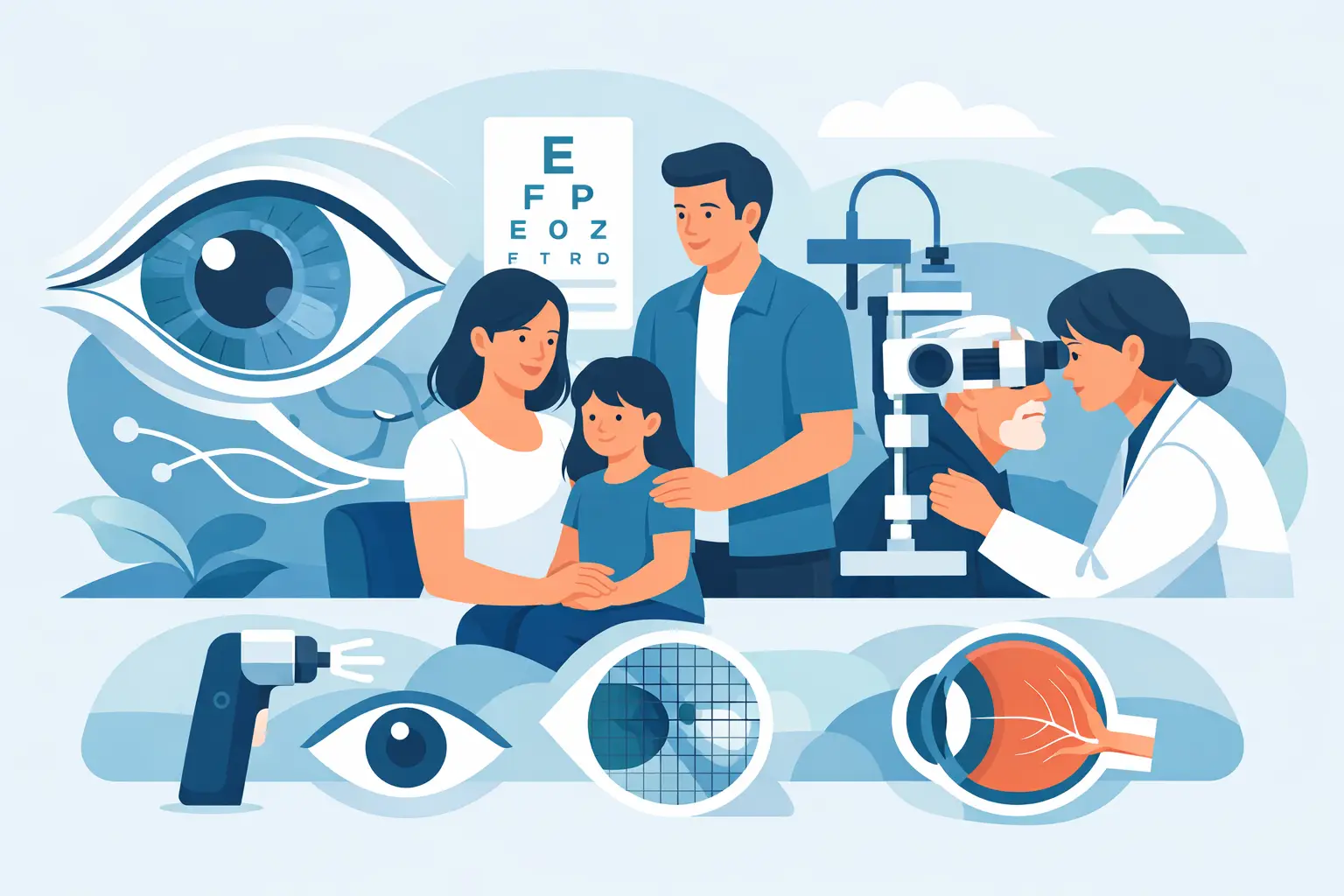
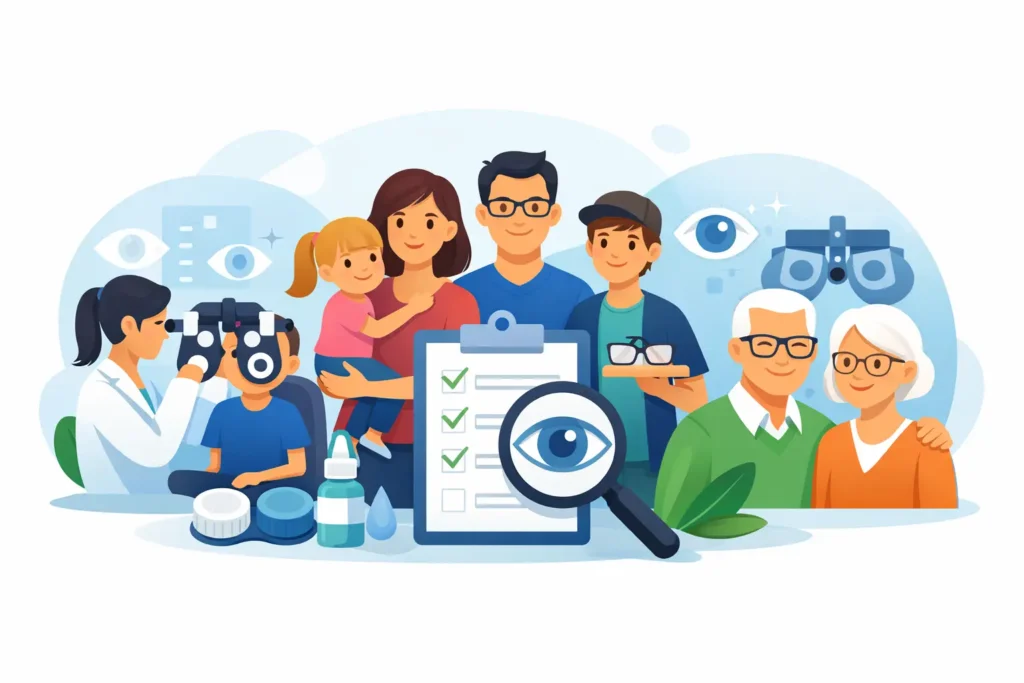
A child who moves closer to the TV, a parent who is squinting through afternoon headaches, and a grandparent who no longer feels confident driving at night may all need something more than a new pair of glasses. A thoughtful family eye care checklist helps you notice small changes early, make room for routine care, and give each person in your household support that fits their life.
Eye care is not one-size-fits-all. A preschooler learning to recognize letters, a teen wearing contact lenses, a busy adult working on screens, and an older adult managing health changes all have different needs. The good news is that a few practical habits can make family eye care feel organized rather than overwhelming.
Build a Family Eye Care Checklist Around Routine Exams
Comprehensive eye exams do more than confirm whether a prescription has changed. They allow an optometrist to assess how well the eyes work together, evaluate eye health, and look for changes that may not cause obvious symptoms at first. This matters because some eye conditions can develop quietly.
Rather than waiting until someone complains that they cannot see clearly, keep a simple record of each family member’s last exam, current glasses or contact lens prescription, medications, and any ongoing symptoms. Your optometrist can recommend the right exam schedule based on age, eye health, family history, vision needs, and medical conditions such as diabetes or high blood pressure.
For many families, it helps to book appointments around natural calendar moments: before a new school year, before a prescription expires, or when benefits renew. Grouping visits can make the process easier, but individual timing still matters. A family member with dry eye symptoms, a stronger prescription, eye disease risk factors, or recent surgery may need more frequent care than another relative.
Children: Look Beyond School Screenings
School vision screenings can be useful, but they are not a replacement for a comprehensive eye exam. A child can pass a basic screening and still have trouble with focusing, eye coordination, depth perception, or other visual skills that support reading and learning.
Watch for frequent eye rubbing, sitting very close to screens, losing their place while reading, avoiding books or homework, covering one eye, headaches, or a noticeable eye turn. None of these signs automatically means there is a serious problem, but they are worth discussing. Children do not always have the words to explain that seeing feels difficult. Sometimes behavior is the clue.
Make eye protection part of the conversation, too. Kids should wear protective eyewear for sports or activities with a risk of impact, not simply rely on everyday glasses. For outdoor time, sunglasses with UV protection can help establish a healthy lifelong habit.
Teens and Adults: Support the Way They Actually Live
For teens, contact lenses can offer freedom for sports, activities, and personal style, but only when worn as directed. Sleeping in lenses that are not approved for overnight use, stretching replacement schedules, or rinsing lenses with water can increase the chance of irritation and infection. A contact lens check keeps comfort, fit, and eye health in the conversation.
Adults often adapt to gradual changes without realizing how much strain they are tolerating. If workdays involve long stretches of screen use, consider whether glare, dry eyes, blurry vision late in the day, or headaches are becoming routine. A prescription update may help, but so can changes to lighting, screen positioning, breaks, and lens options designed for a person’s work and hobbies.
For adults who drive often, spend time outdoors, play recreational sports, or work in dusty or safety-sensitive settings, the right eyewear is part of everyday prevention. The best choice depends on the activity. Fashion sunglasses, prescription sunwear, safety eyewear, and sport-specific protection do different jobs.
Seniors: Pay Attention to Comfort, Safety, and Independence
As we age, it is common to need more light for reading or notice more difficulty with nighttime driving. Still, new or worsening changes should not simply be accepted as part of getting older. Regular exams help monitor eye health concerns that become more common with age and provide an opportunity to discuss glare, falls risk, medication-related dryness, and changing visual demands.
Encourage older relatives to mention practical concerns, not just whether they can read the eye chart. Are stairs harder to judge? Do headlights feel unusually bright? Are they avoiding driving after dark? These details give the care team a clearer picture of how vision is affecting daily life.
Everyday Habits That Protect Family Vision
Routine appointments are the foundation, but daily habits shape eye comfort between visits. Your family does not need a complicated wellness plan. A few consistent choices can make a meaningful difference.
Start with screen comfort. Encourage regular visual breaks during close work, especially when eyes feel tired or dry. Looking across the room for a short time, blinking fully, and adjusting a screen so it is not too close or positioned in harsh glare can reduce strain. If symptoms continue, an eye exam can help identify whether dryness, focusing demands, or an outdated prescription is involved.
Protect eyes from ultraviolet exposure whenever family members are outside. Choose sunglasses that provide UV protection, and remember that sun exposure is not limited to beach days. Water, snow, and pavement can reflect light, while cloudy skies still allow UV through.
At home, keep eye safety supplies appropriate to the task. Safety eyewear belongs near tools, chemicals, and project areas. Store cleaning products securely, and teach children never to handle them without an adult. If an eye is exposed to a chemical, rinse it immediately with clean lukewarm water and seek urgent advice.
Nutrition and overall health also matter. A balanced diet, good hydration, sleep, and management of conditions such as diabetes can support eye health. This is not about finding a perfect supplement or following a strict plan. It is about recognizing that the eyes are part of the whole person.
Know Which Vision Changes Need Prompt Care
Most changes in vision are not emergencies, but a few symptoms should not wait for a routine appointment. Sudden vision loss, a curtain-like shadow, new flashes of light, a sudden shower of floaters, significant eye pain, an eye injury, chemical exposure, or a red eye with light sensitivity and reduced vision deserve prompt professional attention.
A gradual change can matter, too. Persistent redness, recurring irritation, worsening dryness, double vision, headaches connected to visual tasks, or a child who consistently struggles with reading should be assessed. It is better to ask early than to spend months adjusting around a symptom that has a treatable cause.
When you call for help, share when the symptom began, whether it affects one or both eyes, whether there is pain or injury, and whether vision has changed. Clear details help the clinic guide you to the appropriate level of care.
Make Appointments Easier for Everyone
A smooth visit starts before you arrive. Bring current glasses, contact lens information, a medication list, and any questions you have noticed at home. For children, it can help to mention school concerns, sports participation, or reading habits. For seniors, consider bringing a family member if they would appreciate help remembering recommendations or discussing changes in daily activities.
Choose eyewear with real life in mind. A child may need durable frames and secure fit. A parent may want lenses that work comfortably for screens and driving. An older adult may prioritize clear reading vision, reduced glare, or an easier transition between activities. Personalized recommendations are more useful than a rushed, one-pair-fits-all decision.
At 4 Eyes Optometry, family care is designed to feel personal and low-stress, with the time to discuss both eye health and the everyday details that make vision more comfortable.
Keep your checklist somewhere visible, but do not treat it like another household chore. The goal is simply to make space for conversations, routine care, and quick action when something feels different. Those small moments of attention can help every member of the family see and feel their best.