A gritty, burning feeling in your eyes can make an ordinary day feel much longer. You may notice it while driving home, reading on a screen, spending time outdoors, or trying to settle in with a book at night. Dry eye relief is not always about finding one quick fix. It starts with understanding why your eyes are uncomfortable and choosing care that fits your symptoms, health, and daily routine.
Dry eye is common, but that does not mean you need to simply live with it. With the right approach, many people find meaningful, lasting improvement in comfort and vision.
Why Dry Eyes Can Feel So Disruptive
Your tears do more than make your eyes water. They create a protective surface that keeps the front of the eye smooth, comfortable, and clear. When that tear film is unstable or does not provide enough moisture, your eyes can become irritated.
Symptoms are not always as obvious as dryness. Some people feel stinging, itching, redness, sensitivity to light, or a scratchy sensation. Others experience blurry vision that comes and goes, especially late in the day. Watery eyes can also be a sign of dry eye. When the surface of the eye is irritated, your body may produce an overflow of tears that do not stay on the eye long enough to provide real comfort.
Dry eye can affect people at any age, although it becomes more common with age. Hormonal changes, certain medications, contact lens wear, allergies, autoimmune conditions, eyelid changes, and previous eye surgery can all play a role. In our dry climate, wind, smoke, indoor heating, and air conditioning can add to the problem.
Start With Everyday Dry Eye Relief Measures
Small changes can make a noticeable difference, particularly when symptoms are mild or tied to your environment. The key is consistency. If you only address dry eye on the worst days, your eyes may not have the chance to settle into a more comfortable pattern.
Give Screens a Better Routine
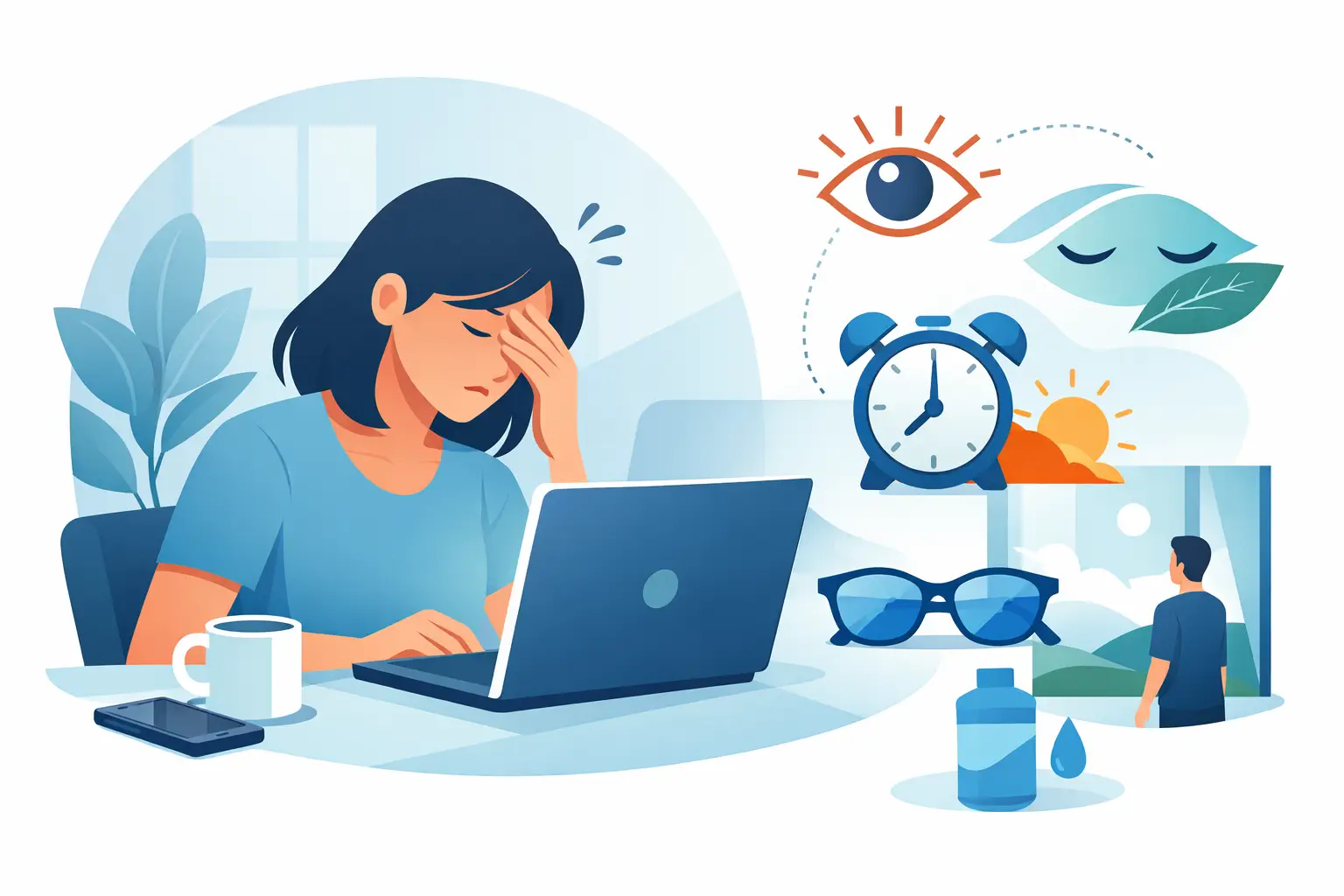
When we focus on a phone, computer, or tablet, we tend to blink less often and less completely. That allows tears to evaporate faster. Rather than trying to avoid screens altogether, build in short visual breaks. Every 20 minutes, look across the room for about 20 seconds and blink gently several times.
Screen position matters too. A screen that sits slightly below eye level can reduce how widely your eyes are open, which may slow tear evaporation. If your eyes feel tired at work, consider whether glare, small text, or an outdated prescription is making you strain more than necessary.
Use Lubricating Eye Drops Thoughtfully
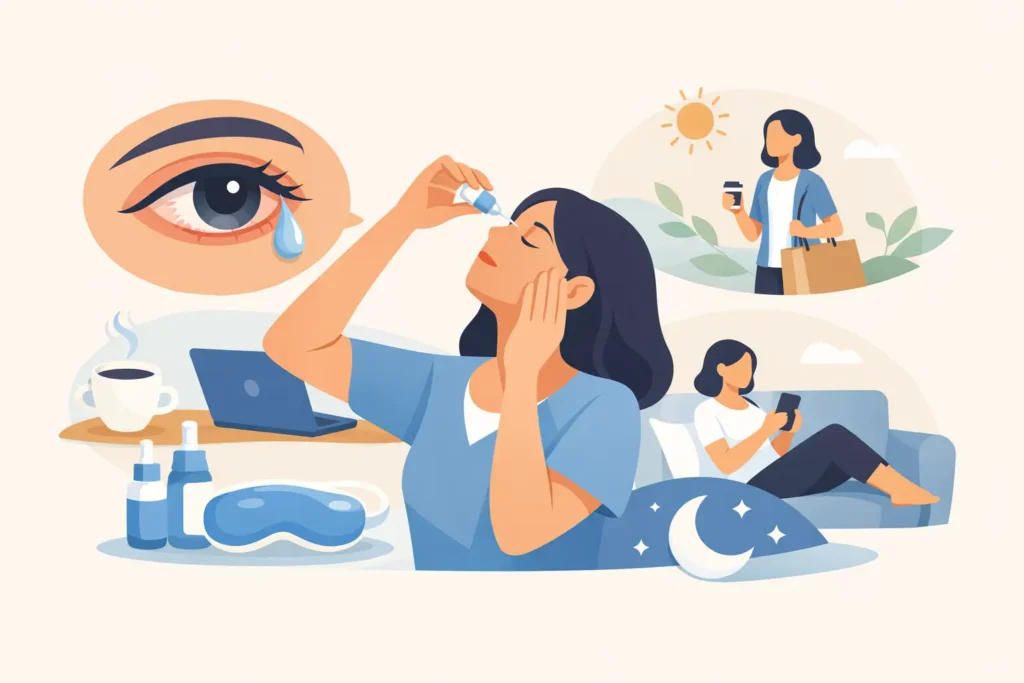
Over-the-counter lubricating drops, often called artificial tears, can provide welcome comfort. They are not all identical, however. Some are better suited for occasional dryness, while others are designed for more frequent use. If you need drops several times a day, preservative-free options are often a gentler choice.
Redness-relief drops are different from lubricating drops. They may temporarily make eyes look whiter, but they do not treat dry eye and can sometimes lead to more redness with repeated use. If you are unsure what to choose, an eye care professional can help you avoid a crowded shelf of products that may not address the real issue.
Try Warm Compresses and Gentle Lid Care
For many people, dry eye is connected to the tiny oil glands along the eyelids. These glands help produce the oily layer of tears that slows evaporation. When the oil is thickened or the glands are blocked, tears may disappear from the eye’s surface too quickly.
A warm compress applied over closed eyes can help soften those oils. Use a clean, comfortably warm compress for several minutes, then gently clean the lash line if you have been advised to do so. Avoid pressing hard on the eye or using water that is too hot. This is a simple habit, but it works best when it becomes part of your regular routine rather than an occasional rescue measure.
Adjust the Air Around You
Fans, car vents, heaters, and air conditioners can direct a steady stream of dry air right at your eyes. Redirecting airflow, wearing sunglasses outdoors, and using a humidifier during especially dry months may help. Protective wraparound eyewear can be particularly useful on windy days or when smoke and dust are in the air.
Hydration supports overall health, but drinking more water alone will not solve every case of dry eye. Think of it as one supportive part of a broader plan, alongside good sleep, balanced nutrition, and attention to your eye environment.
When Dry Eye Relief Needs More Than Drops
It is worth booking an eye exam when dry eye symptoms are frequent, worsening, or interfering with work, driving, contact lenses, or sleep. You should also be seen promptly for sudden pain, significant redness, light sensitivity, discharge, an eye injury, or a noticeable change in vision. Those symptoms can point to a concern beyond routine dryness.
A comprehensive dry eye assessment looks beyond whether your eyes appear dry at that moment. Your optometrist may evaluate the quality and amount of your tears, the health of your eyelids and oil glands, the surface of your eyes, your medication history, contact lens habits, and factors in your home or workplace. This matters because two people can describe the same burning sensation but need very different care.
For example, one person may benefit most from a more consistent home routine and preservative-free lubricating drops. Another may have eyelid inflammation, allergy-related irritation, poor tear quality, or contact lens-related dryness that calls for a more targeted plan. Sometimes a change in contact lens material, replacement schedule, or wearing time can improve comfort without giving up contacts altogether.
Prescription treatments or in-office options may be appropriate for some patients. These recommendations depend on the cause and severity of dry eye, as well as your health history. Personalized care is valuable here because overtreating, undertreating, or using the wrong products can leave you frustrated and still uncomfortable.
Dry Eyes and Contact Lenses: Finding the Right Balance
Contact lenses can be a great fit for active days, sports, and occasions when you prefer not to wear glasses. But dryness can make lenses feel less comfortable as the day goes on. It can also be hard to tell which came first: are the lenses causing the discomfort, or are they making an existing dry eye condition more noticeable?
Do not push through persistent discomfort. Wearing lenses longer than your eyes tolerate can irritate the surface of the eye. A short break in glasses may be helpful, but it is not always the complete answer. An eye exam can help determine whether your lenses fit properly and whether a different lens option or care routine would better support your eyes.
Never use tap water or saliva to rewet lenses, and do not sleep in lenses unless your eye care provider has specifically recommended that schedule. These habits can raise the risk of serious eye infections, especially when the eye surface is already irritated.
A Comfortable Plan Should Be Personal
Dry eye often has more than one cause. That is why the best dry eye relief plan is rarely a generic recommendation copied from a label. Your symptoms may change with the seasons, your work schedule, medications, health conditions, and the amount of time you spend outdoors or on screens.
Keep track of patterns before your appointment. Notice whether discomfort is worse in the morning or evening, at home or at work, with contacts or without them. Bring the eye drops and products you currently use, or take a photo of their labels. These small details can help guide practical recommendations that feel manageable in real life.
At 4 Eyes Optometry, dry eye care is approached with the same attention we bring to every patient relationship: listening closely, looking at the full picture, and helping you feel confident about the next step. Your eyes work hard for you every day. A little thoughtful care can help them feel better doing it.