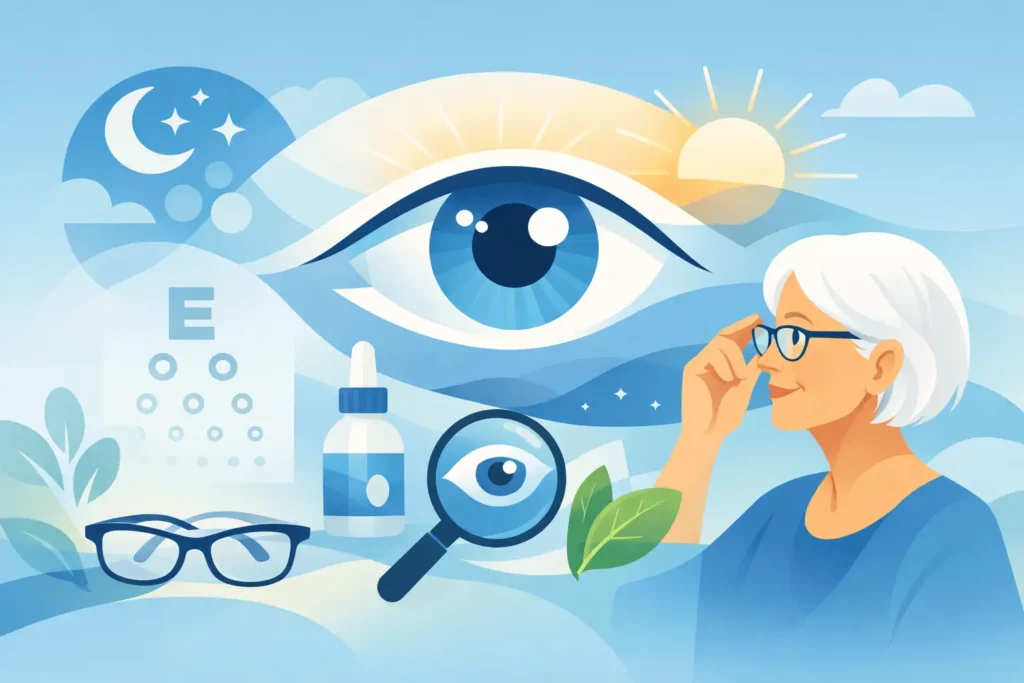
A favorite book suddenly needs brighter light. Driving after sunset feels more tiring than it used to. Or perhaps your eyes are comfortable in the morning but become dry, blurry, or strained by afternoon. These changes are common, but care for aging eyes should never mean simply accepting discomfort or reduced vision as inevitable.
Getting older changes the way our eyes focus, produce tears, and respond to light. It can also increase the likelihood of eye conditions that develop quietly, often before they noticeably affect vision. The encouraging news is that proactive, personalized eye care can make a meaningful difference in comfort, clarity, and long-term eye health.
What Changes in Vision Are Normal With Age?
Many adults first notice presbyopia in their 40s. This is the gradual loss of near focusing ability that makes menus, phone screens, and medicine labels harder to see at a comfortable distance. Reading glasses, progressive lenses, bifocals, or certain contact lens options can help, depending on your daily routine and visual preferences.
Other common changes include needing more light for close work, taking longer to adjust when moving between bright and dim spaces, and noticing more glare while driving at night. The eye’s natural lens becomes less flexible and may gradually become less clear over time. That can contribute to faded color perception, halos around lights, or a feeling that your usual glasses are no longer doing enough.
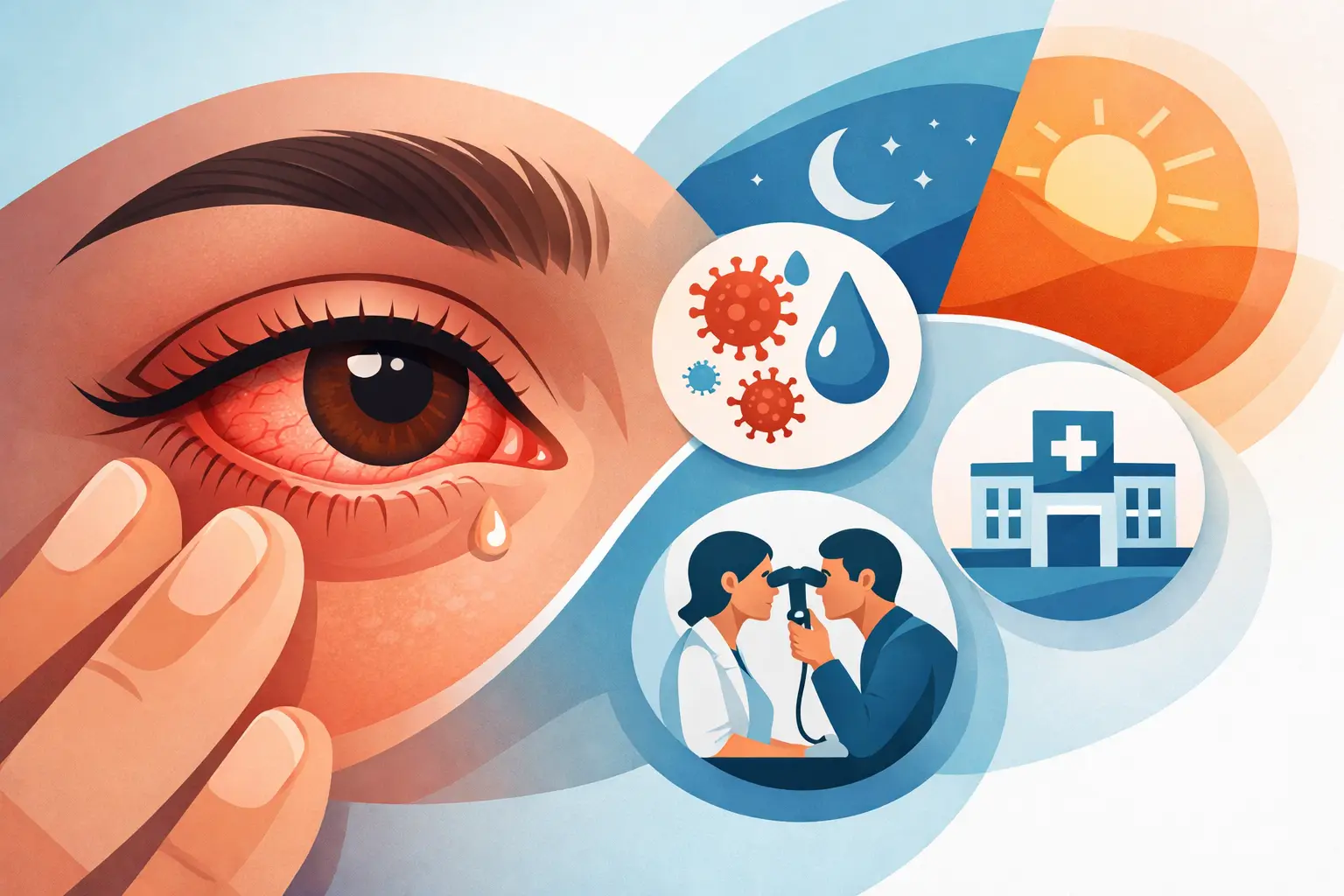
Dry eye symptoms also become more common with age. Burning, grittiness, watering, fluctuating blur, and a tired-eye feeling can all point to dry eye. Oddly, watery eyes do not always mean your eyes have plenty of tears. They can be a response to irritation on the surface of the eye.
These experiences are worth discussing at an eye exam. Some are expected parts of aging, while others may need treatment or closer monitoring.
Why Routine Eye Exams Matter More Over Time
A change in glasses prescription is only one part of an eye exam. Comprehensive visits allow your eye care provider to assess the health of the front and back of the eye, measure eye pressure when appropriate, and look for early signs of conditions that may not cause obvious symptoms at first.
Glaucoma, for example, can damage peripheral vision gradually. Age-related macular degeneration affects the central vision used for recognizing faces, reading, and seeing fine detail. Cataracts can create glare, dimness, and blurred vision. Diabetes and high blood pressure can also affect the delicate blood vessels in the retina.
This does not mean every change in vision is a reason for alarm. It does mean that waiting until vision feels significantly worse is not always the best plan. An eye exam gives you a clear starting point, helps track changes from year to year, and creates space for questions that can be easy to put off.
Your recommended exam schedule depends on your age, eye health, family history, medications, and conditions such as diabetes. People managing glaucoma, macular changes, significant dry eye, or other concerns may need more frequent visits. A personalized recommendation is more useful than relying on a one-size-fits-all timeline.
Everyday Care for Aging Eyes
Good eye health is supported by small choices that fit naturally into daily life. You do not need a complicated routine, but consistency helps.
Wear sunglasses that block UVA and UVB rays when outdoors, even on overcast days. A wide-brimmed hat adds another helpful layer of protection, particularly during long walks, gardening, golfing, or time near water. Sun protection is about comfort as well as long-term eye health.
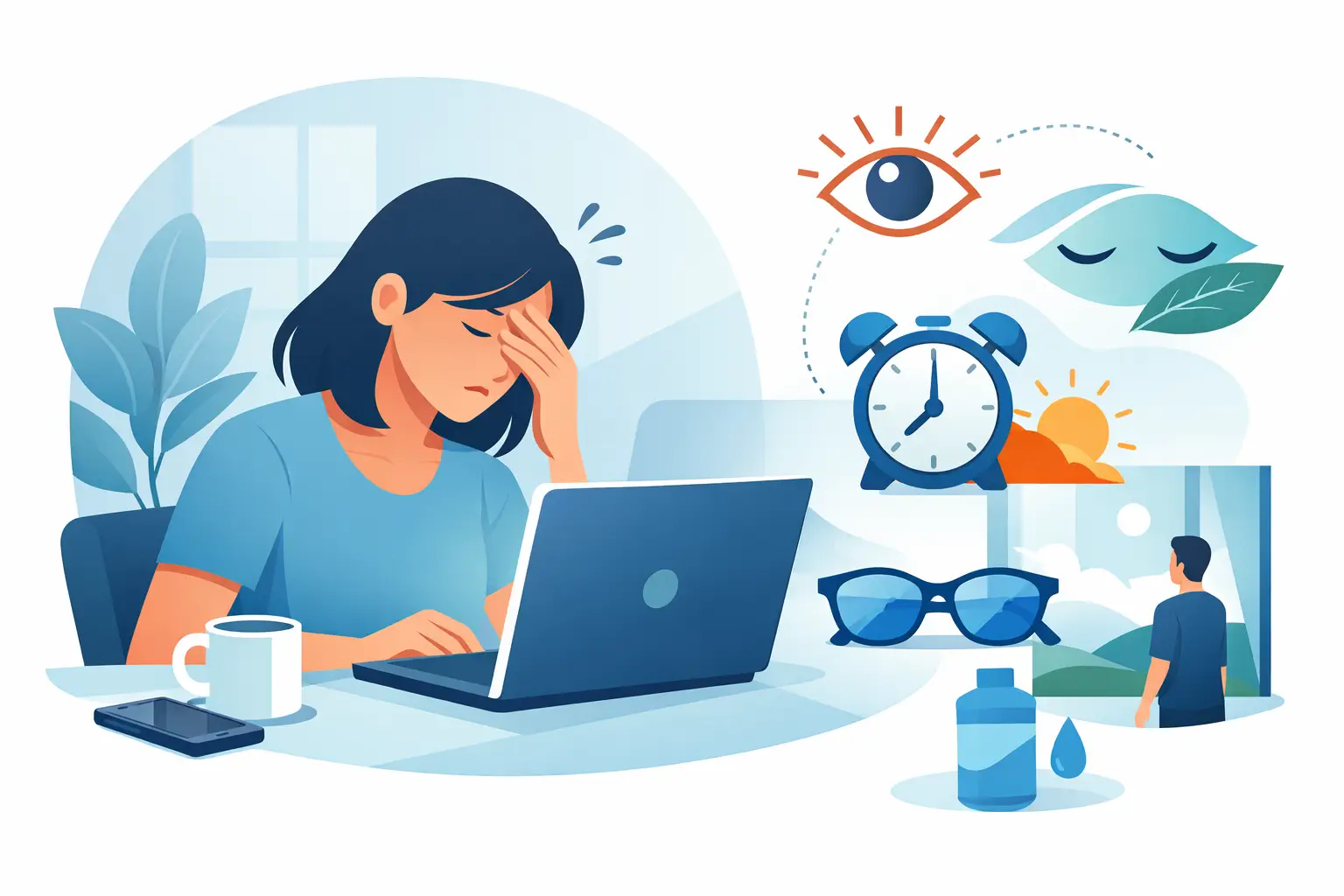
If your eyes feel dry during screen use, take regular visual breaks. Looking into the distance for about 20 seconds every 20 minutes can give your focusing system a rest. Blink fully and deliberately, especially when working at a computer, reading, or scrolling. People naturally blink less often during concentrated close work, which can leave the eye surface feeling dry.
Nutrition supports overall health, including eye health. Colorful fruits and vegetables, leafy greens, fish, nuts, and other nutrient-rich foods are practical choices for many people. If you are considering eye vitamins or supplements, ask your eye care provider first. Certain supplements may be recommended for specific retinal conditions, but they are not automatically right for everyone.
Sleep, hydration, and smoking cessation matter, too. Smoking is associated with a higher risk of several eye conditions, including macular degeneration and cataracts. If quitting feels overwhelming, start with a conversation with your primary care provider about support that fits your situation.
Getting the Right Help for Dry, Tired, or Blurry Eyes
Over-the-counter lubricating drops can be useful for occasional dryness, but persistent symptoms deserve a closer look. Dry eye can be related to the quality of your tears, inflammation along the eyelids, certain medications, hormonal changes, contact lens wear, or environmental factors such as forced air and smoke.
The best solution depends on the cause. One person may benefit from changes to their screen routine and preservative-free lubricating drops. Another may need treatment focused on eyelid health or a more structured dry eye plan. Using redness-relief drops regularly is usually not the same as treating dryness, and it can sometimes make eyes feel worse over time.
Blurry vision also has more than one possible cause. It may be a prescription change, dry eye, a developing cataract, blood sugar fluctuations, or something else entirely. Rather than guessing, an exam can help identify what is happening and what would genuinely improve your comfort.
Make Your Eyewear Work Harder for You
Aging eyes often benefit from eyewear chosen around real life, not just a number on a prescription. Think about where and when you use your eyes most. Are you moving between a computer, paperwork, and people throughout the day? Do you spend hours outdoors? Is night driving becoming stressful? Do you enjoy crafts, cooking, or reading in the evening?
Progressive lenses can offer distance, intermediate, and near vision in one pair of glasses, but lens design and fitting matter. Some people may prefer a dedicated pair for computer work, particularly if they spend long hours at a screen. Anti-reflective coatings can reduce distracting reflections and improve comfort in certain lighting conditions. Photochromic lenses or prescription sunglasses may make bright outdoor conditions more manageable.
There is no single “best” lens for every adult. The right recommendation balances your prescription, eye health, work demands, hobbies, budget, and how you want your glasses to feel day to day. A thoughtful conversation is often what turns new eyewear from an adjustment into a welcome improvement.
Know When a Vision Change Needs Prompt Attention
Most age-related vision changes happen gradually. Sudden changes are different and should be treated seriously. Contact an eye care provider promptly if you experience new flashes of light, a sudden shower of floaters, a curtain or shadow in your vision, sudden vision loss, severe eye pain, marked redness, double vision, or a new distorted area in your central vision.
Urgent symptoms do not always mean a serious condition is present, but timely evaluation matters. If you are unsure whether something can wait, it is always reasonable to call and ask.
At 4 Eyes Optometry, we believe senior eye care should feel calm, clear, and personal. Your questions, lifestyle, and comfort matter alongside the clinical details. Whether you are noticing a small change or managing an ongoing concern, giving your eyes attentive care now can help keep more of the moments you love comfortably in view.