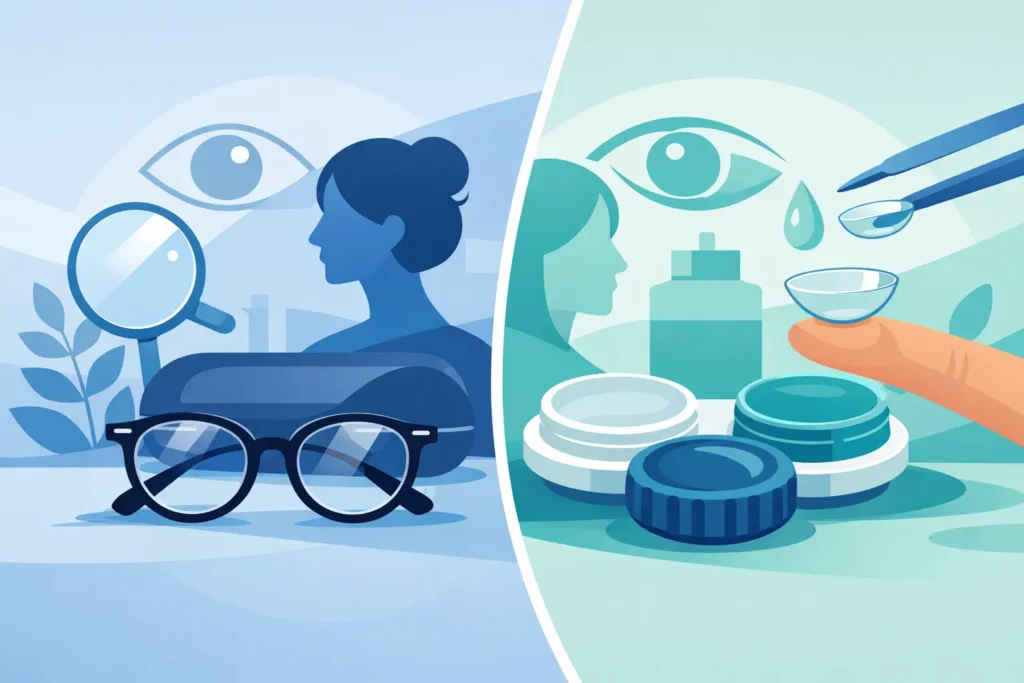
Some people know right away what they want. They put on a pair of frames and feel instantly at home, or they try contacts once and love the freedom. But for many patients, choosing between glasses or contact lenses is less about one being better and more about which option fits their eyes, routine, and comfort.
That is why this decision deserves more than a quick guess. The right choice can make your day easier, help you see clearly in the moments that matter most, and support long-term eye health. In many cases, the best answer is not either-or at all.
Glasses or contact lenses: what really changes day to day?
The biggest difference is how each option fits into your life. Glasses sit in front of the eye, which makes them simple to use and easy to remove. Contact lenses move with your eye and give you a more natural field of view, but they also require more care and consistency.
For some people, that convenience is the deciding factor. If you want something low-maintenance, glasses are often the easier choice. If you play sports, dislike frames on your face, or want vision correction that feels less noticeable, contact lenses may be more appealing.
There is also the question of comfort. Some patients love the feel of glasses and enjoy having multiple frame styles. Others find glasses distracting, especially in rain, cold weather, or while exercising. Contacts can feel freeing, but only when the fit is right and the eyes are healthy enough to wear them comfortably.
When glasses make the most sense
Glasses are often the best place to start, especially for children, first-time wearers, and anyone who wants a straightforward option. They are easy to put on, easy to take off, and do not require direct contact with the eye.
From an eye health perspective, glasses can be a gentle choice for patients with dryness, irritation, allergies, or trouble tolerating contact lenses. If your eyes already feel tired or uncomfortable by the end of the day, adding a lens on the eye may not help unless the underlying issue is managed first.
Glasses also offer consistency. There is no daily insertion and removal routine, no cleaning solution, and no worry about falling asleep in lenses by mistake. For busy parents, teens with packed schedules, or older adults who prefer simplicity, that can be a real advantage.
There are style and protection benefits too. A well-made pair of glasses can include blue light considerations for screen use, sun protection in prescription sunglasses, or lens designs tailored for reading, driving, or progressive vision needs. In other words, glasses are not just a backup plan. For many people, they are the most practical and comfortable primary solution.
When contact lenses are a better fit
Contact lenses can be an excellent option when freedom of movement matters. They do not fog up when you come in from the cold, they stay in place during activity, and they give you a full visual field without frames blocking the edges.
That is especially helpful for sports, fitness, active jobs, and days when you simply do not want to think about your eyewear. Many patients also like that contacts do not change their appearance. If you enjoy wearing non-prescription sunglasses or want a less visible correction option, contacts can make life feel easier.
Contacts can also be useful when certain prescriptions are harder to manage in glasses alone. Higher prescriptions sometimes feel more natural in contact lenses because of the way the lens sits directly on the eye. Some people notice less distortion and better side vision with contacts than with glasses.
Still, success with contact lenses depends on healthy habits. Clean hands, proper replacement schedules, and regular follow-up care matter. Contacts are medical devices, not just a convenience item. When they are fitted well and worn responsibly, they can be a very comfortable and reliable choice.
The trade-offs people do not always expect
Every vision correction option comes with trade-offs, and this is where personalized guidance matters.
Glasses can slide, collect smudges, and feel inconvenient in certain weather or workouts. They can also create pressure on the nose or behind the ears if the fit is off. Most of those issues are fixable, but they are still part of daily wear.
Contact lenses may seem simpler once they are in, but they ask more from the wearer. Dry eyes, seasonal allergies, long screen days, and not drinking enough water can all affect comfort. Even patients who usually do well in contacts may notice that some days feel better than others.
Cost can vary too. Glasses often involve a larger upfront purchase, while contacts can be more of an ongoing expense with lenses, solution, and follow-up care. Depending on your prescription, lifestyle, and how often you replace your eyewear, one may make more sense financially than the other.
Then there is the matter of flexibility. Many patients assume they need to commit to one side. In reality, wearing contacts most days and keeping glasses for evenings, travel, illness, or screen-heavy work is often the most comfortable approach.
Glasses or contact lenses for kids, adults, and seniors
Age and stage of life can shape the answer.
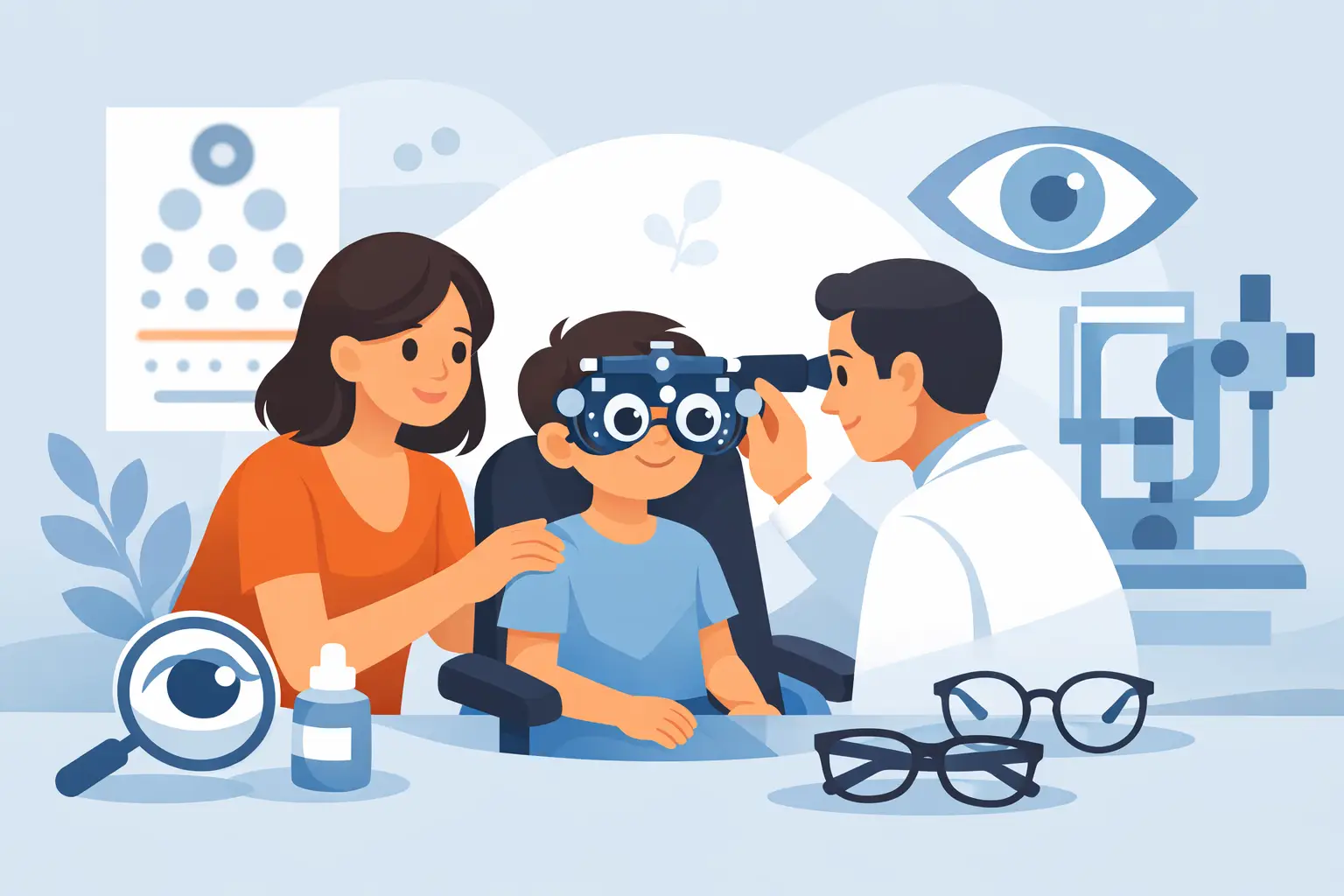
For children, glasses are usually the easier and safer starting point. They are simpler to monitor, easier to adjust, and less dependent on daily handling habits. That said, some older children and teens do very well with contact lenses, especially if they are active in sports or motivated to care for them properly.
For adults, the decision often comes down to routine. A patient with a fast-paced workday may love the ease of contacts, while someone who spends long hours at a computer may prefer glasses, especially if dryness is already an issue. Adults juggling work, parenting, and errands often appreciate having both options available.
For seniors, comfort, dexterity, and eye health become more important factors. Arthritis, dry eye, cataracts, medication changes, and other age-related concerns can affect whether contact lenses are practical. Glasses are often easier to manage, but some seniors are excellent contact lens candidates when their eyes are healthy and handling lenses feels manageable.
Eye health matters more than preference alone
This is the part people sometimes skip. You can love the idea of contact lenses and still not be the best candidate for them right now. You can also feel frustrated with glasses and discover that a lens update, coating change, or frame adjustment makes a huge difference.
The health of the eye surface matters. Tear quality matters. Prescription details matter. Even your work environment matters. Dry indoor air, lots of screen use, outdoor dust, and seasonal smoke can all affect comfort and wear time.
That is why a proper exam and fitting are so helpful. A personalized recommendation looks at more than your prescription. It considers how your eyes function, how your days are structured, and what will feel realistic for you to maintain.
At 4 Eyes Optometry, that conversation is meant to feel supportive, not pressured. The goal is to help patients find an option that works well in real life, not just in theory.
How to decide without overthinking it
If you are stuck between the two, start with a few practical questions. Do you want the simplest option, or the most freedom? Are your eyes usually comfortable, or do they run dry and irritated? Do you need something for sports, all-day computer use, special occasions, or everyday wear?
It also helps to think in terms of your actual week, not your ideal one. If you know you are unlikely to keep up with lens care, glasses may serve you better. If you know frames constantly get in the way of work or activity, contacts may be worth exploring.
And if both sound useful, that is a valid answer. Many people are happiest when they stop treating this like a permanent either-or decision. Glasses and contact lenses can work together.
The best vision correction is the one you will wear comfortably, consistently, and confidently. When your choice fits your eyes and your life, seeing clearly feels a lot easier.