
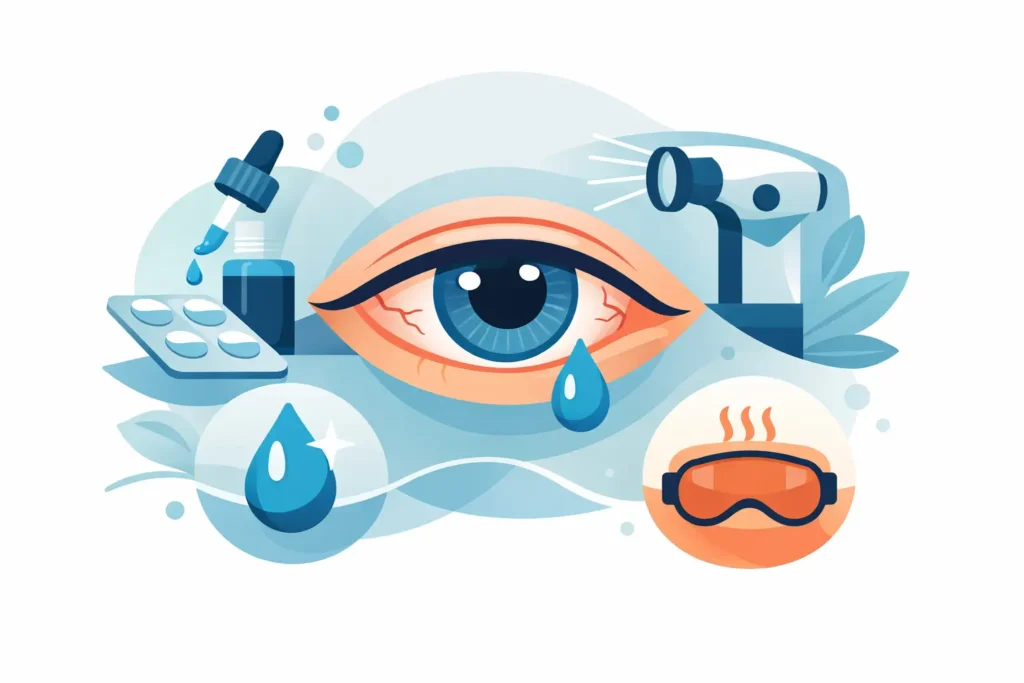
Your eyes should not feel gritty by midafternoon, water nonstop when you step outside, or burn every time you put in your contacts. Yet that is exactly how dry eye often shows up. Many people are surprised to learn that dry eye treatment options are not one-size-fits-all. The best plan depends on why your eyes are dry, how long symptoms have been going on, and what your day-to-day life looks like.
Why dry eye can be tricky to treat
Dry eye is not always caused by a simple lack of tears. In many cases, the issue is tear quality, not just tear quantity. Your tears have layers of oil, water, and mucus, and each layer helps keep the surface of the eye comfortable and clear. If one part of that system is off, your tears can evaporate too quickly or fail to protect the eye properly.
That is why two people with similar symptoms may need different care. One person may have irritated eyelids and clogged oil glands. Another may be reacting to screen time, medication side effects, hormonal changes, contact lens wear, or an underlying health condition. This is also why grabbing random drops from a store shelf does not always solve the problem.
Common dry eye treatment options
Some dry eye treatment options are simple and effective at home, while others work better as part of a guided treatment plan. Often, relief comes from combining a few approaches rather than relying on just one.
Artificial tears and lubricating drops
For mild or occasional symptoms, preservative-free artificial tears are often a good starting point. They can add moisture, reduce irritation, and improve comfort during reading, computer work, or dry weather. Some formulas are thinner and feel light, while others are thicker and last longer.
The trade-off is that over-the-counter drops can help with symptoms without addressing the underlying cause. If you are using them frequently and still uncomfortable, it is worth having your eyes checked rather than continuing to self-manage.
Warm compresses and lid hygiene
If dry eye is related to meibomian gland dysfunction, which means the oil glands along the eyelids are not working well, warm compresses can be very helpful. Gentle heat softens thickened oils so they can flow more normally. Lid hygiene, such as cleaning the eyelid margins, can also reduce buildup and inflammation.
This sounds simple because it is, but consistency matters. A warm compress done once in a while may feel nice without changing much. Done regularly and correctly, it can make a real difference.
Lifestyle and environmental changes
Sometimes the most useful fix is practical. Blinking more fully during screen time, taking visual breaks, running a humidifier, adjusting airflow from fans or car vents, and staying hydrated can all help support the tear film.
These changes are especially relevant for people who work on computers, spend long hours driving, or notice symptoms are worse in heated or air-conditioned spaces. They are not flashy solutions, but they often improve comfort in a lasting way.
Contact lens adjustments
Contact lenses can make dry eye feel worse, especially if the lens material, fit, or wearing schedule is not ideal. In some cases, changing to a different lens type or reducing wearing time helps significantly. In other cases, dry eye needs to be treated first before contacts become comfortable again.
This is a good example of why personalized care matters. The goal is not simply to tell someone to stop wearing contacts. It is to figure out what is contributing to the discomfort and whether there is a better option.
When dry eye needs more than home care
If symptoms are frequent, moderate, or affecting your quality of life, home remedies may not be enough. Burning, fluctuating vision, redness, excess tearing, light sensitivity, and a constant tired-eye feeling can all point to a more persistent issue.
Prescription dry eye treatment options
Prescription eye drops may be recommended when inflammation is playing a bigger role. These medications are designed to calm the surface of the eye and help support healthier tear production over time. They are not usually instant-relief products, so expectations matter. Some people improve gradually over several weeks.
There can also be trade-offs. Prescription drops may cost more than over-the-counter options, and some people notice temporary stinging or need time to build a routine. Still, for the right patient, they can be an important part of long-term relief.
In-office treatment for dry eye
For people with blocked oil glands, chronic irritation, or symptoms that keep returning, in-office treatment can offer another level of support. Depending on the findings, treatment may focus on improving gland function, reducing inflammation, or protecting the surface of the eye more effectively.
This is where an exam becomes especially valuable. Instead of guessing, your optometrist can look at tear quality, eyelid health, gland function, and other contributing factors. At 4 Eyes Optometry, that kind of personalized dry eye management is meant to make care feel clear, supportive, and tailored to real life.
What can make dry eye worse
Dry eye rarely exists in a vacuum. A treatment plan works better when the aggravating factors are recognized too.
Screen use is a major one. People tend to blink less when focusing on a device, which leaves the tear film exposed longer. Age can also play a role, since tear production and gland function may change over time. Hormonal shifts, certain medications, autoimmune conditions, allergies, and previous eye surgery can all affect symptoms.
Even watering eyes can be part of dry eye. That sounds backwards, but when the eye surface becomes irritated, it can trigger reflex tearing. Those tears usually do not have the right balance to keep the eyes comfortable, so you end up with watery eyes that still feel dry.
How to know which treatment makes sense for you
The best dry eye treatment options depend on what is driving the problem. If symptoms are mild and tied to a specific trigger, basic support may be enough. If symptoms are daily, worsening, or affecting reading, driving, work, or contact lens wear, a more complete treatment plan is usually the better path.
A few questions can help clarify the next step. Are your symptoms occasional or constant? Do your eyes burn, water, blur, or feel tired? Are mornings worse, or evenings? Do screens make things harder? Have store-bought drops stopped helping?
Answers to those questions often point toward whether you need hydration, inflammation control, eyelid treatment, changes to your visual habits, or a combination of all four. That is also why online advice only goes so far. Dry eye can look simple from the outside while having several causes underneath.
Dry eye treatment options for different situations
Someone who spends eight hours a day on a laptop may need a very different plan than a senior dealing with medication-related dryness. A parent who wears contacts and juggles a busy household may want something realistic and easy to maintain. Another patient may need more hands-on treatment because symptoms have been ignored for months or years.
That is not a drawback. It is actually good news, because it means there are multiple ways to help. You do not need the most aggressive treatment if your symptoms are mild, and you do not need to settle for temporary relief if your dry eye has become a daily frustration.
When to book an eye exam
If your eyes are uncomfortable more days than not, if your vision comes and goes during the day, or if dryness is interfering with work, hobbies, or sleep, it is time to book an exam. The same is true if you have redness, pain, light sensitivity, or a sudden change in symptoms. Those signs deserve proper evaluation rather than guesswork.
Dry eye is common, but that does not mean you have to live with it. The right care can make reading easier, screens more comfortable, contact lenses more wearable, and everyday life a lot less irritating. Relief often starts with understanding what your eyes actually need and giving them a plan that fits you.