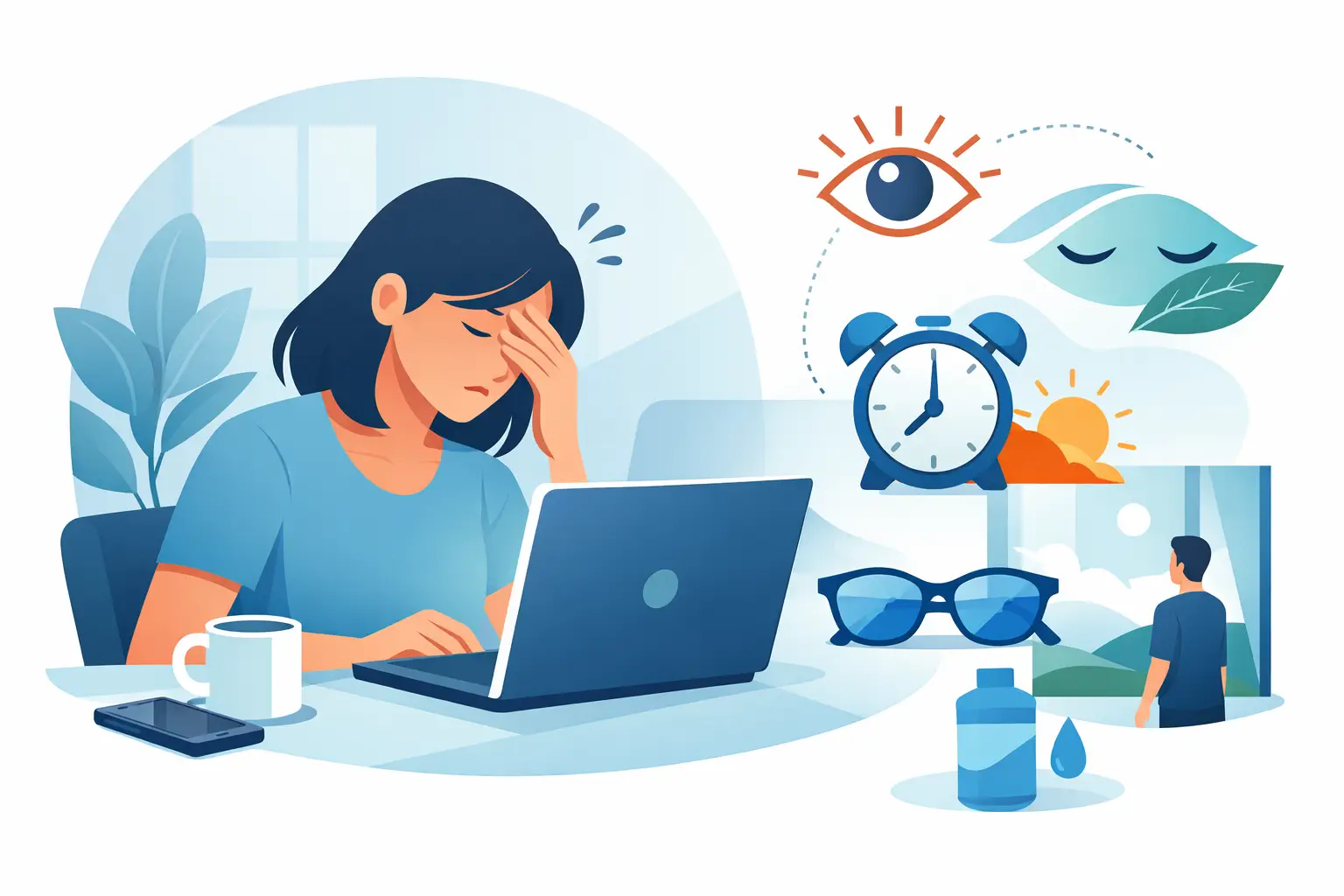
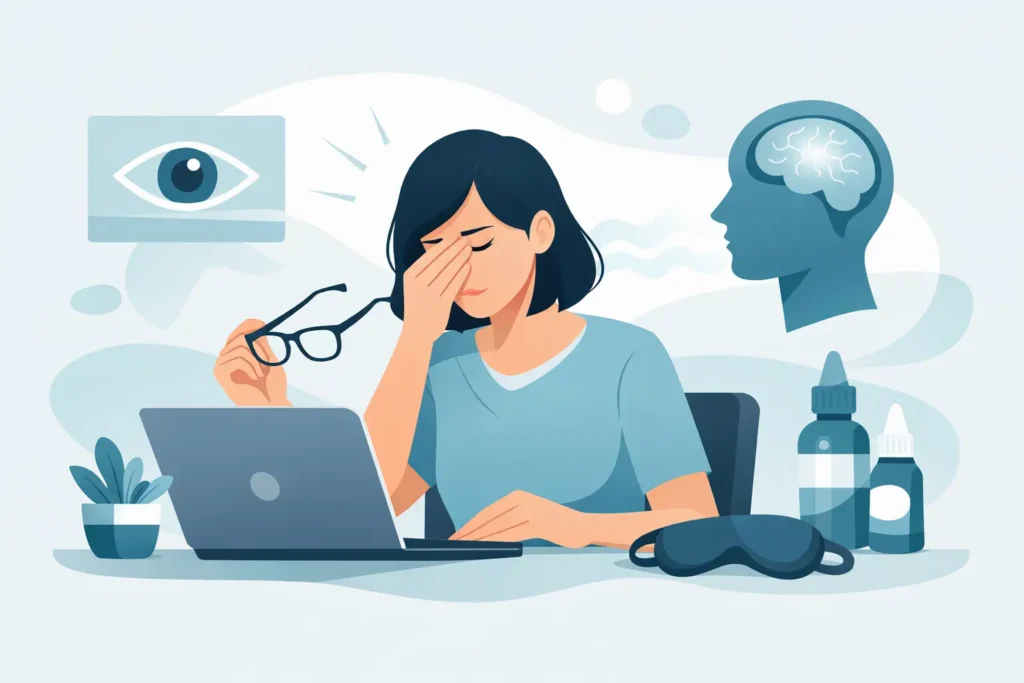
By midafternoon, many people can feel it without even checking the clock – tired eyes, a dull headache, blurry focus, and that dry, irritated feeling that seems to build with every hour on a screen. Computer vision syndrome treatment is not usually about one magic fix. It is usually about finding the right mix of habit changes, comfort strategies, and eye care that matches how you work and live.
For some people, symptoms show up only during long workdays. For others, screen time adds strain on top of dry eye, an outdated prescription, or trouble focusing at near. That is why the best approach is personal. When treatment matches the real cause of the strain, relief tends to be much more consistent.
What computer vision syndrome really feels like
Computer vision syndrome is a collection of symptoms linked to extended screen use. You might notice dry eyes, burning, watering, blurred vision, double vision, headaches, eye fatigue, neck pain, or shoulder tension. Not everyone gets the same symptoms, and that matters when choosing treatment.
Screens change the way we use our eyes. We blink less, often hold devices too close, and spend long stretches focused at one distance. Add poor lighting, glare, or an old prescription, and the strain can build quickly. In many cases, the eyes are not damaged, but they are being asked to work harder than they should.
That distinction can be reassuring, but it does not mean symptoms should be ignored. Persistent discomfort can affect work, school, sleep, and overall comfort. If your eyes feel off every day, that is worth addressing.
Computer vision syndrome treatment starts with the cause
A useful treatment plan begins with one question: what is driving your symptoms most?
If dryness is the main issue, treatment may focus on improving the tear film and reducing evaporation. If blurry vision is more noticeable, the issue may be an uncorrected prescription, trouble with focusing, or eye teaming strain. If headaches and posture problems happen along with eye fatigue, your screen setup may be part of the problem too.
This is where a comprehensive eye exam can make a real difference. Two people can both say, “My eyes hurt after screen time,” and need very different solutions. One may need lubricating drops and better blink habits. Another may need glasses for computer use. Another may have dry eye disease that needs more than over-the-counter care.
The simplest treatment changes often help the most
Many cases improve with a few practical adjustments, especially when symptoms are mild to moderate.
The 20-20-20 rule is a good place to start. Every 20 minutes, look at something about 20 feet away for 20 seconds. This gives the focusing system a short break and can reduce that locked-in feeling that happens during long periods of near work. It sounds small, but done consistently, it helps.
Blinking more often also matters. People naturally blink less when reading on screens, and incomplete blinking is common too. That leaves the surface of the eye exposed longer, which can lead to dryness, burning, and fluctuating vision. A quick pause to fully close the eyes a few times can reset comfort more than many people expect.
Screen position plays a role as well. A monitor that sits slightly below eye level is usually more comfortable than one placed too high. Looking slightly downward exposes less of the eye surface, which may help with dryness. Keeping screens at a reasonable distance also reduces demand on the focusing system.
Lighting is another easy place to improve comfort. Bright overhead lighting, window glare, and reflections on a screen can all increase strain. Sometimes computer vision syndrome treatment is partly as simple as adjusting blinds, repositioning a monitor, or using a matte screen filter.
When dry eye is part of the problem
Dry eye and screen strain often overlap. In fact, many people who think they only have computer fatigue are really dealing with dryness that becomes more noticeable during digital tasks.
If your eyes sting, burn, water excessively, or feel gritty by the end of the day, dry eye may be involved. Artificial tears can help, especially preservative-free options if you use them often. A warm compress, better hydration, and regular blinking can also support comfort.
Still, dry eye is not always simple. Oil gland dysfunction, inflammation, contact lens wear, medications, and hormonal changes can all contribute. If drops help only a little or symptoms keep returning, it may be time for a more complete dry eye evaluation. Treating the underlying dryness often improves screen comfort far more than screen breaks alone.
Glasses can be part of computer vision syndrome treatment
A surprisingly common cause of screen discomfort is wearing the wrong prescription for the job. Distance glasses are not always ideal for long hours at a desktop. Reading glasses may work at one near distance but not another. And small prescription changes can matter more at the end of a long workday than they do during a quick task.
Computer glasses are designed for the distance where you actually use your screen. For some people, that means a single-vision computer prescription. For others, updated progressive lenses or occupational lenses make more sense. It depends on age, screen setup, and whether you switch between devices during the day.
Blue light questions come up often here. Some patients find certain coatings more comfortable, especially when they reduce glare. But blue light filters are not a cure-all for every case of digital eye strain. The better conversation is usually about your symptoms, your schedule, and whether lens design, screen habits, or dry eye is doing most of the heavy lifting.
Children and teens can get screen strain too
Computer vision syndrome is not just an adult work problem. Children and teens spend long hours on laptops, tablets, phones, and gaming devices, and they may not always say clearly that their eyes are uncomfortable. Instead, parents may notice rubbing, short attention during homework, headaches, avoidance of reading, or complaints that words go blurry.
Treatment for younger patients still starts with understanding the cause. A child may need a vision check, especially if the issue is actually focusing strain or an uncorrected prescription. Breaks from near work, better posture, and balanced screen habits are helpful, but they should not replace an exam when symptoms continue.
When to book an eye exam for ongoing symptoms
If symptoms are frequent, worsening, or interfering with daily life, it is time to get your eyes checked. That is especially true if you notice persistent blur, eye pain, double vision, redness, or headaches that keep returning.
An eye exam can help rule out issues that may look like simple screen fatigue but are actually related to dry eye disease, binocular vision problems, prescription changes, or other eye health concerns. It is also the best way to build a treatment plan that is realistic for your routine instead of relying on trial and error.
At a family-focused clinic like 4 Eyes Optometry, that conversation is meant to feel supportive, not overwhelming. The goal is to understand what you are experiencing, explain what is contributing, and recommend options that fit your day-to-day life.
What to expect from a personalized treatment plan
The most effective computer vision syndrome treatment is usually layered. You may need small changes in several areas rather than one dramatic intervention.
A personalized plan might include updated glasses, dry eye care, scheduled visual breaks, workstation adjustments, and advice on screen distance or lighting. If you wear contact lenses, your lens type or wearing schedule may need to be reviewed too. If your symptoms are mostly at work, your plan may look different than someone whose strain happens during evening phone use.
That is the value of individualized care. Treatment should not just sound good in theory. It should be something you can actually follow in real life.
There is also room for trial and adjustment. If one strategy helps but does not fully solve the problem, that does not mean treatment has failed. It may simply mean there is more than one contributor. Good eye care is often about refining the plan until comfort becomes more reliable.
Small changes now can prevent bigger frustration later
Many people get used to eye strain and assume it is just part of modern life. It is common, but it should not be your normal. When your eyes feel better, work feels easier, reading is more comfortable, and the end of the day is a lot less draining.
If screens leave your eyes dry, tired, or hard to focus, paying attention early can spare you a lot of daily frustration. A few thoughtful changes and the right professional guidance can go a long way toward making screen time feel much more comfortable.