
A contact lens can look perfect on paper and still feel wrong by lunchtime. For people with astigmatism, the best contact lenses for astigmatism are not simply the ones with the highest rating or newest material. They are the lenses that stay clear when you move, feel comfortable through your real day, and fit the health needs of your eyes.
Astigmatism is very common, and it should not keep you from enjoying reliable contact lens vision. The right fit can make driving, working at a screen, exercising, and reading feel more natural. Finding that fit takes a little more care than choosing a standard spherical lens, but the payoff can be significant.
Why astigmatism needs a different contact lens
Astigmatism means the front surface of the eye, or sometimes the lens inside the eye, has a shape that bends light unevenly. Instead of coming to one precise focus, light can spread across more than one point. The result may be blur, ghosting around letters, glare at night, or eye strain.
Most people with astigmatism need a toric contact lens. Unlike a standard soft contact lens, a toric lens has different powers in different parts of the lens. It also has a built-in design that helps it settle into the correct position on the eye. That stable orientation matters. If the lens rotates too much with a blink, your vision can become intermittently blurry even when the prescription itself is correct.
This is why a contact lens prescription involves more than the numbers from an eyeglass prescription. Your optometrist also considers the shape of your cornea, the way your eyelids interact with the lens, tear film quality, and how the lens moves after each blink.
The best contact lenses for astigmatism depend on your day
There is no single best toric lens for every person. A lens that works beautifully for a busy parent with mild dry eye may not be the best option for a construction worker, a frequent traveler, or someone with a stronger prescription. The most helpful question is not, “Which brand is best?” It is, “What does my vision need to do comfortably each day?”
Daily disposable toric lenses
Daily disposable lenses are worn once and discarded at the end of the day. For many people, they are an excellent starting point because every morning begins with a clean lens. This can be especially appealing if you have seasonal allergies, a busy schedule, or a tendency toward deposits and irritation.
Daily toric lenses can also simplify life for teens, occasional contact lens wearers, and anyone who prefers not to manage cleaning solutions and storage cases. The trade-off is cost. They may have a higher ongoing price than reusable lenses, particularly when worn every day. Availability can also be more limited for very high prescriptions or more complex astigmatism.
Biweekly and monthly toric lenses
Reusable toric lenses are designed to be cleaned, disinfected, and stored each night, then replaced on a set schedule. They often provide more prescription options and can be a practical choice for full-time wearers.
They do require consistent care. Skipping cleaning steps, topping off old solution, or wearing lenses past their replacement date increases the chance of discomfort and infection. If you prefer reusable lenses, the best choice is one that fits well and one you can realistically care for every day. A contact lens routine should feel manageable, not like another stressful household task.
Silicone hydrogel lenses
Many modern toric lenses are made from silicone hydrogel, a material that allows more oxygen to reach the cornea than older soft lens materials. For some patients, this supports comfortable all-day wear and helps maintain eye health.
More oxygen does not automatically mean a lens will feel best. Some eyes respond better to one material than another, and dryness can still affect comfort. The lens surface, its moisture properties, your tear film, and the fit all matter. If one silicone hydrogel lens feels dry, that does not mean contacts are not for you. Another design may feel entirely different.
Specialty lenses for complex prescriptions
Soft toric lenses work very well for many people, but they are not the only option. People with high astigmatism, irregular corneal shape, keratoconus, or vision that remains unstable in soft lenses may benefit from specialty designs such as rigid gas permeable, hybrid, or scleral lenses.
These lenses require a more detailed fitting process, but they can deliver clearer, more stable vision in the right situation. They are not automatically better for routine astigmatism. They are simply valuable options when standard soft toric lenses are not providing the comfort or clarity you need.
Clear vision should stay clear
A well-fitted toric lens should provide more than a sharp first look in the exam room. It should stay dependable when you glance down at your phone, turn your head while driving, or spend an afternoon outdoors.
Some signs that your current lenses may need reassessment include vision that fluctuates after blinking, halos or glare at night, frequent lens awareness, redness, or a lens that feels as if it shifts. These symptoms can be caused by lens rotation, dryness, an outdated prescription, or an eye health concern. They are worth discussing rather than simply tolerating.
For people over 40, near vision needs may also begin to change. You may see well across the room but notice that restaurant menus or messages on your phone are harder to focus on. Multifocal toric lenses, modified monovision, or a combination of contacts and reading glasses can be considered. The right approach depends on your prescription, visual priorities, and comfort with adaptation.
Dry eye can change the answer
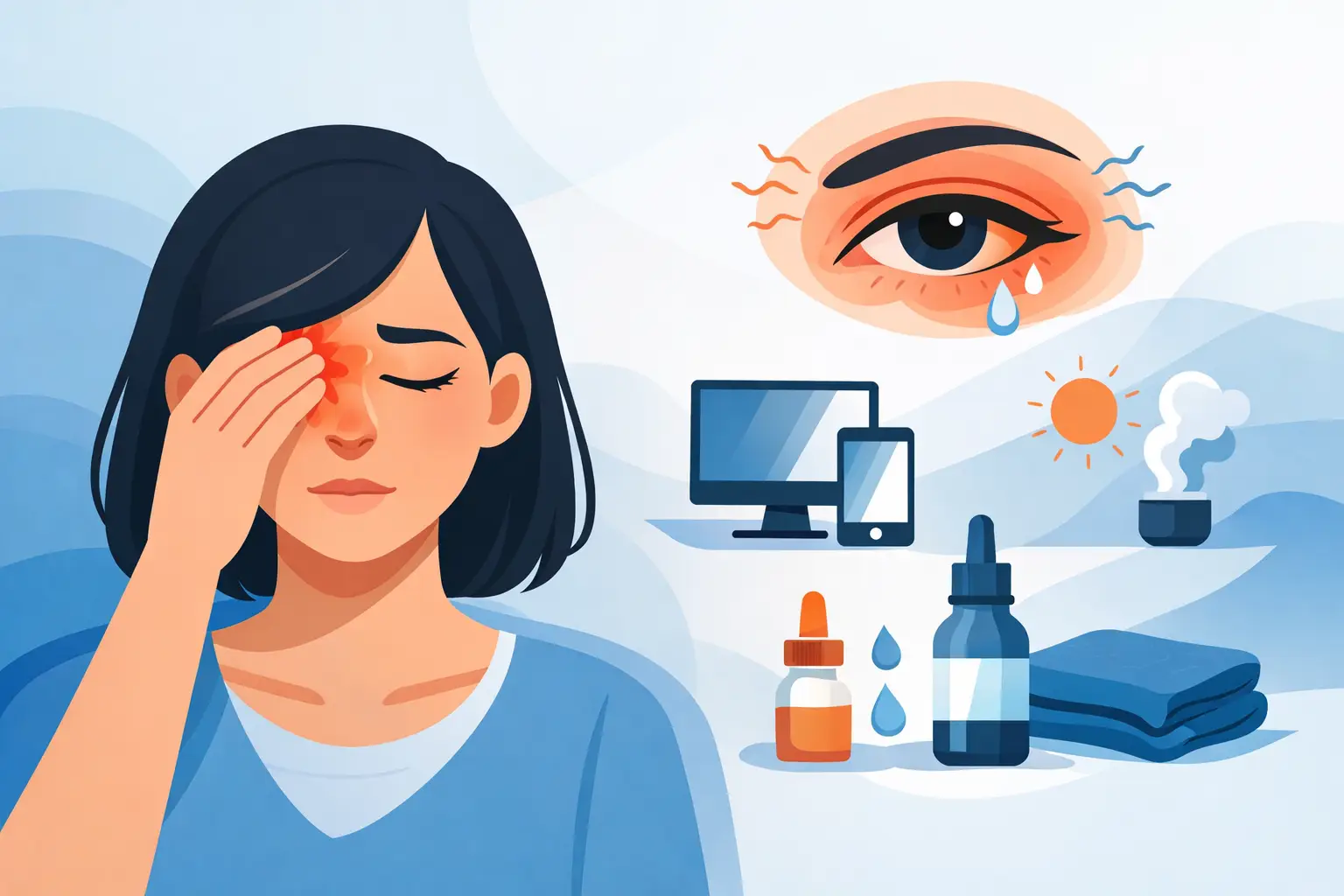
Dryness is one of the biggest factors in contact lens comfort. It may show up as burning, grittiness, fluctuating vision, watering eyes, or lenses that feel fine early in the day but irritating later on. Screen time, heating and air conditioning, allergies, medications, hormonal changes, and age can all contribute.
If dry eye is part of the picture, choosing a lens with a comfortable material and an appropriate replacement schedule is only one piece of the plan. Your optometrist may also look at your eyelid health, tear quality, and blinking habits. Sometimes treating dry eye first makes contact lens wear much more successful.
It is tempting to switch from one box of lenses to another based on a friend’s recommendation. But a lens that helps someone else may not address the reason your eyes feel dry. Personalized care can save time, frustration, and money spent on lenses that never quite feel right.
A proper fitting is part of the product
Contact lenses are medical devices, not one-size-fits-all accessories. During a contact lens exam, your optometrist confirms your prescription, evaluates the front surface of your eyes, measures how the lens sits and moves, and checks your vision with the lenses in place.
For astigmatism, the assessment also includes checking whether the lens rotates and whether the prescription needs to be adjusted to account for that rotation. You may be asked to try more than one lens design. That is normal. A trial period lets you judge your vision and comfort in the settings that matter most, from computer work to evening driving.
At 4 Eyes Optometry, that conversation can include the practical details that are easy to overlook: how long you wear lenses, whether your eyes feel tired at the end of the day, how often you travel, and whether you want daily simplicity or a reusable option. Those details help turn a technically correct prescription into a choice that feels good to live with.
How to protect comfort and eye health
Even the best-fitting lens will not perform well if it is overworn or poorly cared for. Follow the replacement schedule exactly, wash and dry your hands before handling lenses, and use fresh recommended solution for reusable lenses. Never rinse lenses or cases with tap water, and do not sleep in lenses unless your eye doctor has specifically prescribed that wear schedule.
Remove your lenses and seek prompt eye care if you develop pain, light sensitivity, significant redness, discharge, or a sudden change in vision. Contact lens-related problems can progress quickly, and early attention is the safest approach.
The best lens choice should make your vision feel less like a daily negotiation. If your current contacts leave you reaching for eye drops, squinting at night, or counting down the hours until you can take them out, bring that experience to your next eye exam. Your day-to-day comfort is useful clinical information, and it can lead to a better-fitting solution.