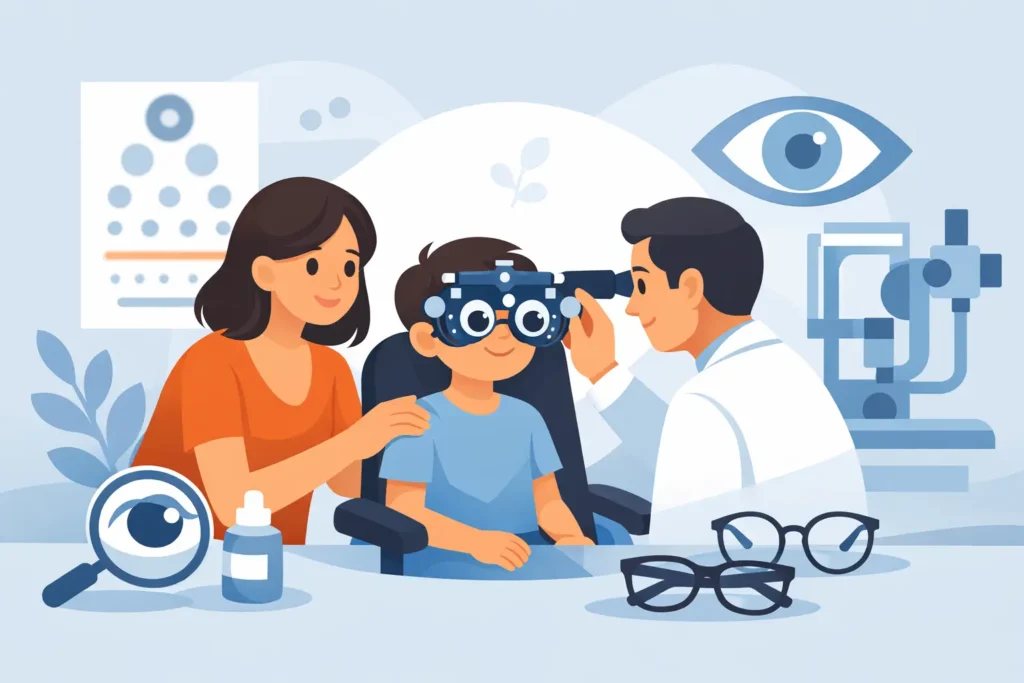
If your child has never complained about their vision, it is easy to assume everything is fine. That is exactly why a guide to pediatric eye exams matters. Kids often adapt to blurry vision, eye strain, or focusing problems without realizing anything is wrong, and parents may not see obvious signs until school, sports, or reading start to feel harder than they should.
For many families, the biggest surprise is that pediatric eye exams are about much more than checking whether a child can read letters across the room. A comprehensive exam looks at how the eyes work together, how well a child focuses, whether vision is developing normally, and whether there are early signs of eye health concerns. When those issues are caught early, care is usually simpler, less stressful, and more effective.
Why pediatric eye exams matter early
Children rely on vision for learning, movement, social development, and confidence. Reading from the board, tracking words on a page, catching a ball, judging depth on stairs, and staying comfortable during screen time all depend on more than just distance clarity.
A child can pass a basic vision screening at school and still have an issue that deserves attention. Screenings are useful, but they are limited. They may miss problems with focusing, eye teaming, depth perception, mild farsightedness, or conditions that affect one eye more than the other. Those are the kinds of concerns that can quietly interfere with school performance or daily comfort.
Early exams also help identify problems during important stages of visual development. Some conditions respond best when treated young, so timing can make a real difference. That does not mean parents need to feel alarmed. It simply means routine care gives children the best chance to see clearly and comfortably as they grow.
A simple guide to pediatric eye exams by age
Parents often ask when to start. The answer depends a little on health history, symptoms, and your child’s development, but there are a few general milestones that help.
Infants should have their eyes assessed as part of routine well-child care, especially to check for healthy visual development and obvious eye health concerns. A comprehensive eye exam is often recommended in the preschool years, even if no symptoms are present. Before kindergarten, it is especially helpful to confirm that vision, eye coordination, and focusing skills are ready for classroom demands.
Once children are in school, regular eye exams become part of ongoing preventive care. Some kids need visits more often, especially if they already wear glasses, have a family history of eye conditions, were born prematurely, or are showing signs of strain, headaches, squinting, or trouble concentrating.
There is no one-size-fits-all schedule for every family. Some children do very well with routine annual care. Others may need closer follow-up based on what the doctor finds. The goal is not to overcomplicate things. It is to keep vision development on track and make sure small issues do not turn into bigger frustrations later.
What happens during a pediatric eye exam
One reason parents delay booking is uncertainty about what the appointment will actually look like. The good news is that a child’s eye exam is designed to be age-appropriate, gentle, and manageable.
A comprehensive pediatric exam usually begins with questions about your child’s health, development, school experience, symptoms, and family eye history. From there, the testing is tailored to your child’s age and comfort level. Young children do not need to know the alphabet to have their eyes checked. Eye doctors can use shapes, matching games, pictures, lights, and child-friendly tools to measure vision and assess how the eyes are developing.
The exam may include checking visual acuity, how the eyes move and work together, depth perception, focusing ability, color vision in some cases, and overall eye health. The doctor may also evaluate whether a glasses prescription would help, even if your child has not complained.
Sometimes drops are recommended to get a more accurate picture of focusing and prescription needs. Parents are often nervous about this part, but it is common and can be very helpful, especially in children whose eyes naturally work hard to compensate.
A good pediatric visit should never feel rushed or impersonal. It should feel like a conversation, with clear explanations and recommendations that make sense for your child’s daily life.
Signs your child may need an eye exam sooner
Routine care is important, but some children benefit from an earlier visit. The signs are not always dramatic. In fact, many are easy to mistake for behavior, fatigue, or lack of interest.
A child who avoids reading, loses their place often, sits very close to screens, covers one eye, tilts their head, squints, or complains of headaches may be working harder to see than they should. Frequent eye rubbing, short attention span during near tasks, and trouble with hand-eye coordination can also point to a vision issue.
Teachers sometimes notice concerns before parents do. A student who seems distracted, rushes through schoolwork, struggles with copying from the board, or mixes up similar-looking words may need more than academic support. Vision can be one piece of the puzzle.
It also helps to trust your instincts. If something about your child’s visual behavior seems off, even if you cannot explain it clearly, that is a good enough reason to book an exam.
Common conditions found in pediatric eye exams
Many of the issues found during childhood eye exams are very manageable, especially when caught early. Refractive errors such as nearsightedness, farsightedness, and astigmatism are common. Some children see better right away with glasses. Others may only need monitoring, depending on age, symptoms, and how strongly the prescription affects daily life.
Eye teaming and focusing issues are another common finding. These may not show up on a basic screening, but they can affect reading stamina, comfort, and concentration. In some cases, one eye may be weaker than the other, which can lead to reduced visual development if not addressed.
Doctors also look for eye health concerns such as allergies, eyelid issues, or less common medical conditions. Most appointments are routine and reassuring, but part of the value of comprehensive care is knowing that eye health is being checked thoroughly, not just vision clarity.
How to prepare your child for the visit
Parents do not need to do much to get ready, but a little preparation can help the experience feel easier. Let your child know they are going to have their eyes checked, just like other health visits. Keep the explanation simple and positive. For younger kids, it can help to say they will look at pictures, lights, and shapes.
Try not to frame the exam as a test they can pass or fail. That can make children anxious or encourage guessing. Instead, tell them the doctor wants to learn how their eyes are doing.
Bring current glasses if your child already wears them, along with any questions from school or concerns you have noticed at home. If your child is nervous, that is okay. Pediatric eye care teams are used to working with shy, active, or uncertain kids and can adapt the pace of the exam.
What if your child needs glasses?
Many parents worry that glasses will be a hard adjustment. Sometimes they are, and sometimes children put them on and immediately relax because the world looks clearer and feels easier. It really depends on the child, their age, and how much the prescription changes their vision.
If glasses are recommended, the best results usually come from choosing frames that fit well, feel comfortable, and suit your child’s routine. An active child may need something durable and secure. A child who is sensitive to how things feel may need extra attention to comfort. Small details matter because kids are much more likely to wear glasses consistently when they feel good in them.
This is also where personalized care makes a difference. Rather than handing over a prescription and sending a family on their way, a thoughtful clinic helps parents understand why glasses are needed, when they should be worn, and what changes to expect.
Choosing a calm, family-friendly approach
This guide to pediatric eye exams would not be complete without talking about the experience itself. For children, the setting matters. So does the tone of the appointment. A warm, welcoming clinic can turn what parents expect to be stressful into something surprisingly smooth.
That matters for more than convenience. When kids feel comfortable, testing is usually more accurate, conversations are easier, and follow-up care becomes less intimidating. For parents, it is reassuring to know they have a place that will get to know their family over time and offer recommendations based on the child in front of them, not a generic checklist.
At 4 Eyes Optometry, that kind of relationship-centered care is part of what makes family eye care feel more manageable. Parents want clear answers, children need patience, and everyone benefits when care feels thorough without feeling overwhelming.
If you have been putting off your child’s exam because life is busy or nothing seems obviously wrong, this is your gentle reminder that preventive care is often the easiest care. A simple visit now can support comfort, confidence, and learning in ways that show up every day.