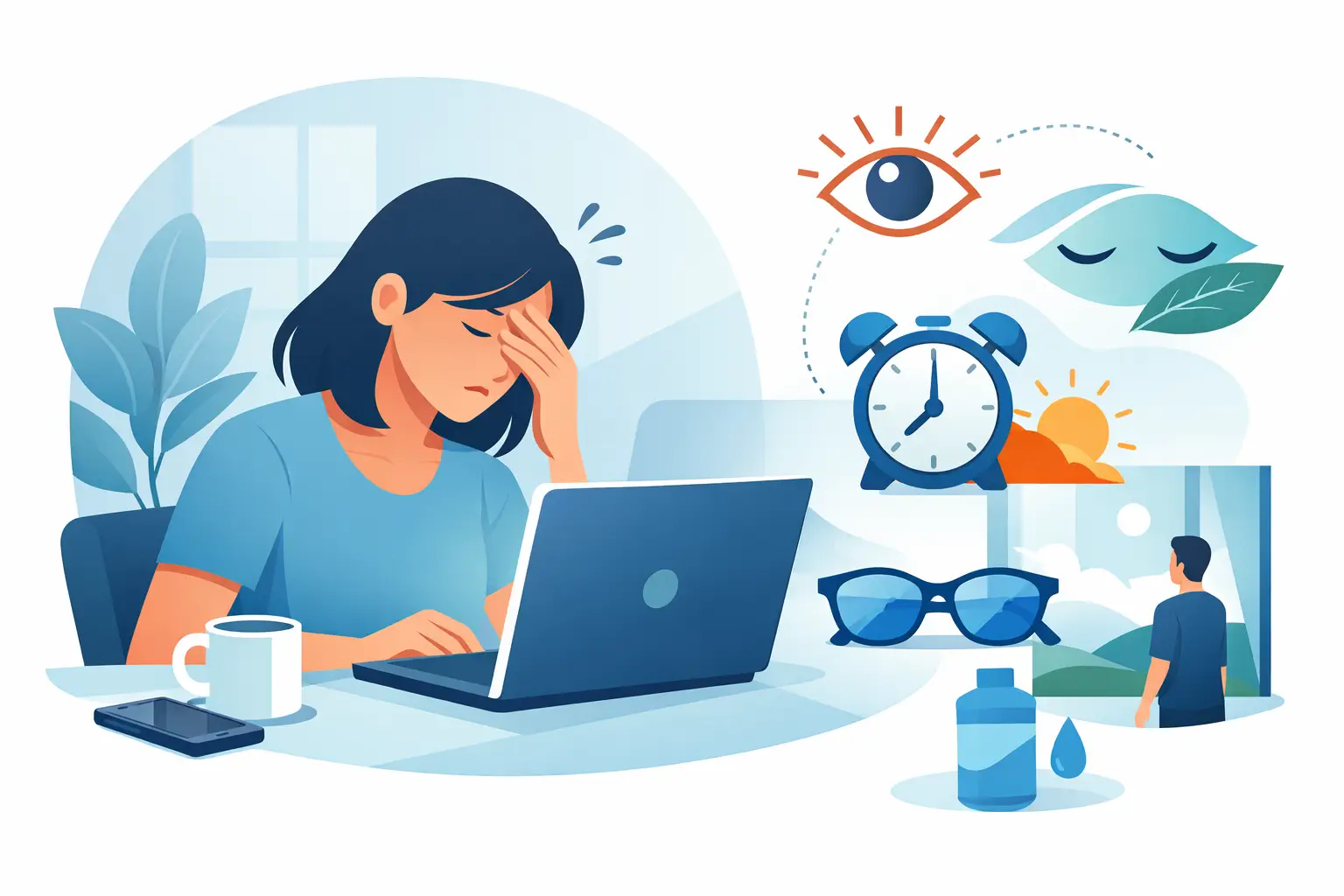
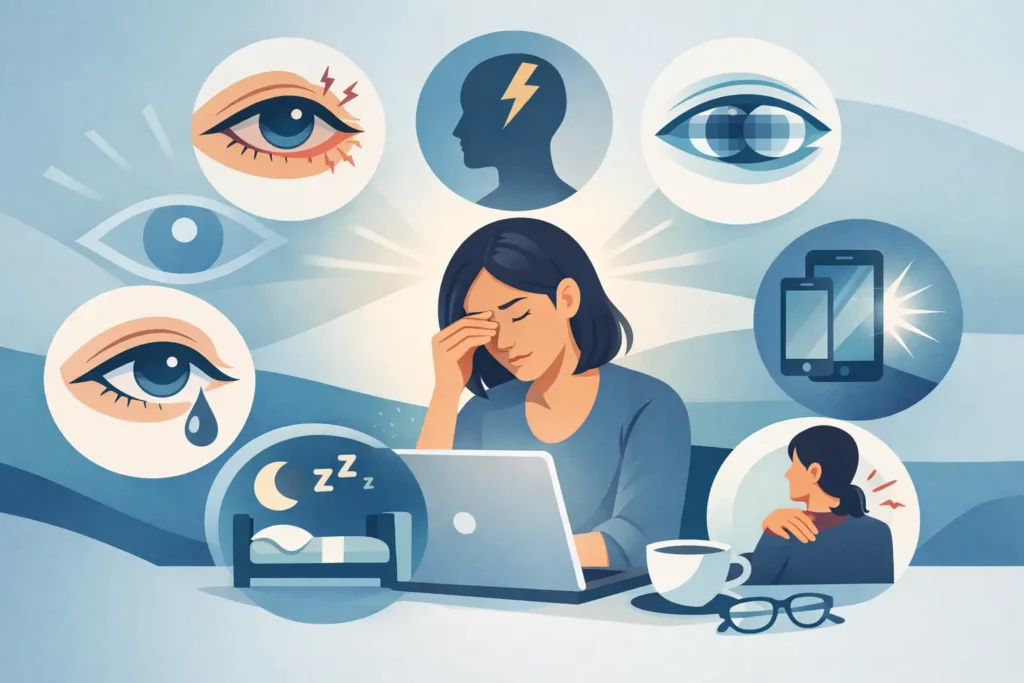
You are halfway through the workday, your eyes feel tired, and somehow your neck and shoulders are tense too. You blink a few times, rub your eyes, and keep going. For many adults, teens, and even kids, those small annoyances are some of the earliest signs of digital eye strain.
Screen time is part of daily life now. We work on laptops, answer messages on our phones, help kids with online homework, stream shows at night, and scroll in the few quiet minutes in between. The problem is not that screens are automatically harmful. It is that long stretches of close-up visual work can push the eyes past what feels comfortable, especially when lighting, focus, blinking, or prescriptions are not working in your favor.
Digital eye strain is common, but it is not something you have to ignore. When you know what to watch for, it becomes easier to make changes early and get the right support if symptoms keep coming back.
What digital eye strain actually feels like
Digital eye strain is a group of symptoms linked to extended screen use and other near tasks. It does not always show up as one dramatic problem. More often, it feels like a collection of low-grade issues that build as the day goes on.
Some people notice it most while working. Others feel it later in the evening, when their eyes are tired, dry, and slow to refocus. Children may not describe the feeling clearly at all. They may just avoid reading, complain that schoolwork is hard, or seem unusually irritable after device use.
7 signs of digital eye strain to watch for
1. Tired, heavy, or sore eyes
This is one of the most common symptoms. Your eyes may feel overworked by the afternoon, even if your vision seems mostly fine. That heavy-eyed feeling often comes from sustained focusing effort at a close distance for hours at a time.
If you switch between multiple screens, read small text, or work without enough breaks, that fatigue can show up even faster. It is easy to brush off, but if it happens regularly, it is worth paying attention to.
2. Dry, irritated, or watery eyes
Many people are surprised to learn that watery eyes can actually be a sign of dryness. When we concentrate on screens, we usually blink less often and less completely. That means the tear film does not spread as well across the surface of the eye.
The result can be burning, stinging, grittiness, redness, or reflex tearing. If your eyes feel better when you step away from screens and worse when you return, dryness may be part of the picture.
3. Blurry vision during or after screen use
Temporary blur is another classic sign. You may notice that text starts looking fuzzy after a long period of close work, or that your distance vision seems off when you look up from a screen.
Sometimes that blur clears quickly. Sometimes it lingers longer than you would expect. It can happen when the focusing system of the eyes becomes fatigued, but it can also point to an uncorrected prescription or another visual issue that deserves a closer look.
4. Headaches, especially around the eyes or forehead
Not every headache is related to vision, but eye strain can absolutely contribute. Screen-related headaches often show up after long periods of reading, computer work, or phone use. They may feel concentrated around the eyes, temples, or forehead.
This is one of those symptoms where context matters. A headache after ten straight hours at a screen is not unusual. A headache after short periods of normal use, especially if it keeps happening, may suggest that your eyes are working harder than they should.
5. Trouble focusing when switching distances
If it takes a moment for your eyes to adjust when you look from your computer to across the room, that lag can be another sign of digital eye strain. The focusing system is meant to be flexible, but long stretches of near work can make it feel slower or less comfortable.
Adults often notice this when moving from a laptop to a meeting room or while driving home after a full workday. For some patients, age is part of the story. For others, it is more about screen habits, fatigue, or a prescription that no longer fits their needs.
6. Light sensitivity or discomfort with bright screens
A screen that feels too bright, especially later in the day, can make already strained eyes feel worse. Some people start lowering brightness more and more, while others find overhead lights or daylight suddenly uncomfortable after extended device use.
Light sensitivity is not exclusive to digital eye strain, so this is a symptom to take seriously if it is new, significant, or paired with pain or vision changes. Still, in everyday cases, it often shows up alongside dryness, fatigue, and headaches.
7. Neck and shoulder tension that comes with screen use
This one is easy to miss because it does not seem eye-related at first. But when vision is not comfortable, people often lean forward, tilt their chin, squint, or hold awkward postures to compensate. Over time, that can lead to tension in the neck, shoulders, and upper back.
If your body feels as tired as your eyes after a day on screens, it may not be just an ergonomic issue. Visual strain and posture often feed into each other.
Why the signs of digital eye strain happen
Usually, there is not one single cause. It is more often a stack of smaller factors. Long periods of close-up focus, reduced blinking, dry indoor air, poor workstation setup, screen glare, and outdated prescriptions can all contribute.
It also depends on the person. Someone with dry eye may struggle sooner than someone with a stable tear film. A child with an uncorrected vision problem may avoid schoolwork instead of saying their eyes hurt. An adult in their forties may notice more trouble refocusing because the eyes naturally become less flexible with age.
That is why quick fixes are helpful, but not always enough. If symptoms keep repeating, it is worth asking why your eyes are under that much stress in the first place.
What you can do at home first
Small changes often make a real difference. Start with how long you stay on screens without a break. Looking away every 20 minutes for about 20 seconds at something farther away can give the focusing system a reset. It is simple, and it works best when you actually remember to do it.
Your screen position matters too. A screen that is too high can leave your eyes more exposed and dry. A comfortable setup usually keeps the screen slightly below eye level and about an arm’s length away, though exact distance can vary based on the device and the task.
If dryness is a big part of your symptoms, blinking more intentionally can help. So can adjusting airflow from fans or vents and using lubricating eye drops if they are appropriate for you. Text size, brightness, and glare also matter. Larger text and reduced reflections can take some strain off your eyes right away.
When it is time to book an eye exam
Occasional screen fatigue after a long day is common. Ongoing discomfort is different. If the signs of digital eye strain are frequent, getting worse, or interfering with work, school, reading, or driving, it is a good time to schedule a comprehensive eye exam.
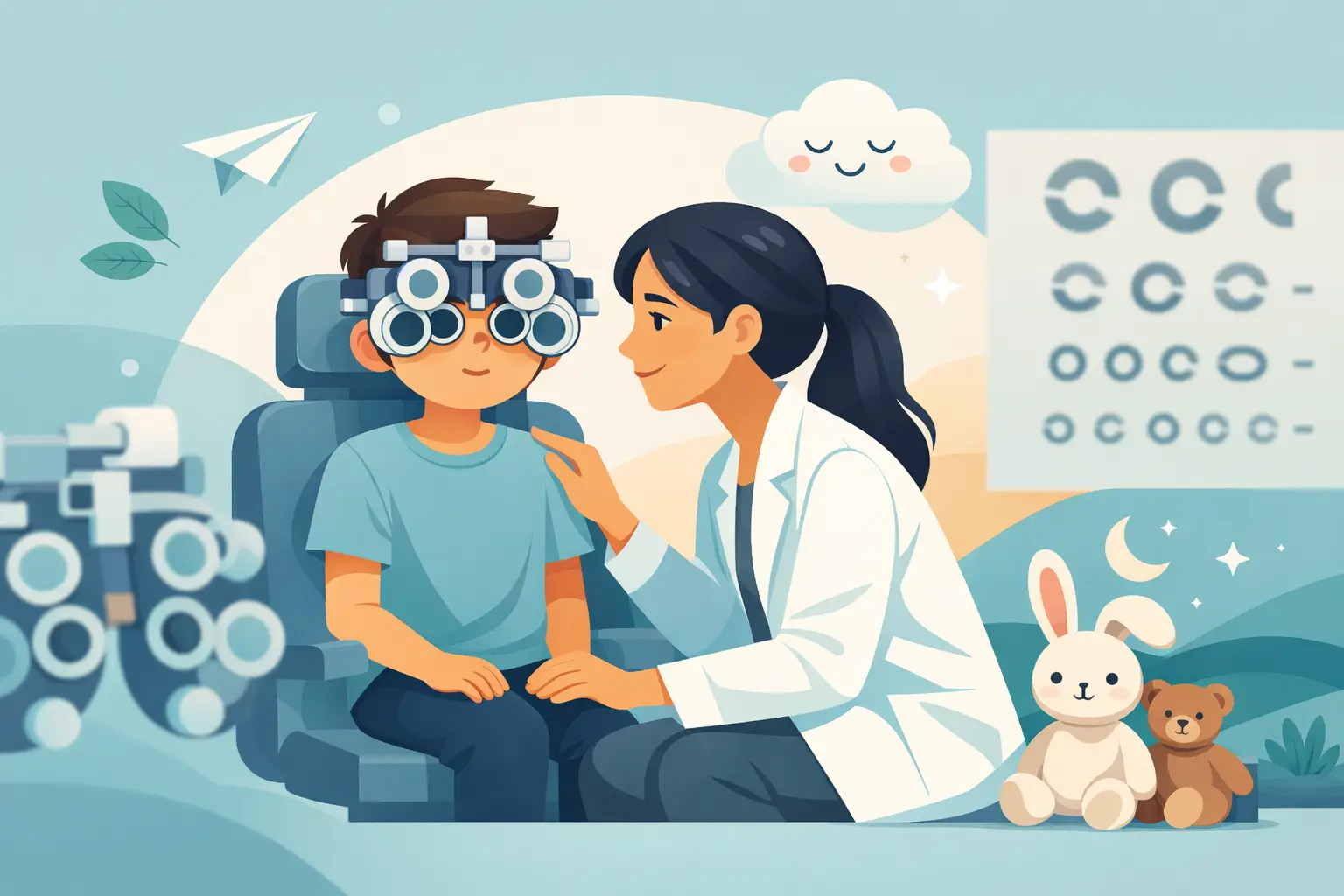
This matters because digital eye strain can overlap with other concerns. Dry eye disease, prescription changes, binocular vision issues, and some health conditions can all look similar at first. If a child is struggling with reading or avoiding close work, an eye exam is especially important. Kids do not always realize that what they are seeing is not normal.
At 4 Eyes Optometry, we often remind patients that comfort is part of healthy vision. If your eyes are working too hard all day, that is worth addressing. Sometimes the solution is as straightforward as an updated prescription or screen-specific advice. Sometimes it involves treating dryness or looking more closely at how the eyes focus and work together.
A more comfortable relationship with screens
Screens are not going away, and most of us would not want them to. The goal is not to avoid modern life. It is to notice when your eyes are asking for support.
If your eyes burn, blur, ache, or tire out every day, do not wait for it to become your normal. Paying attention early can lead to simpler, more comfortable solutions, and your eyes will thank you for it.