
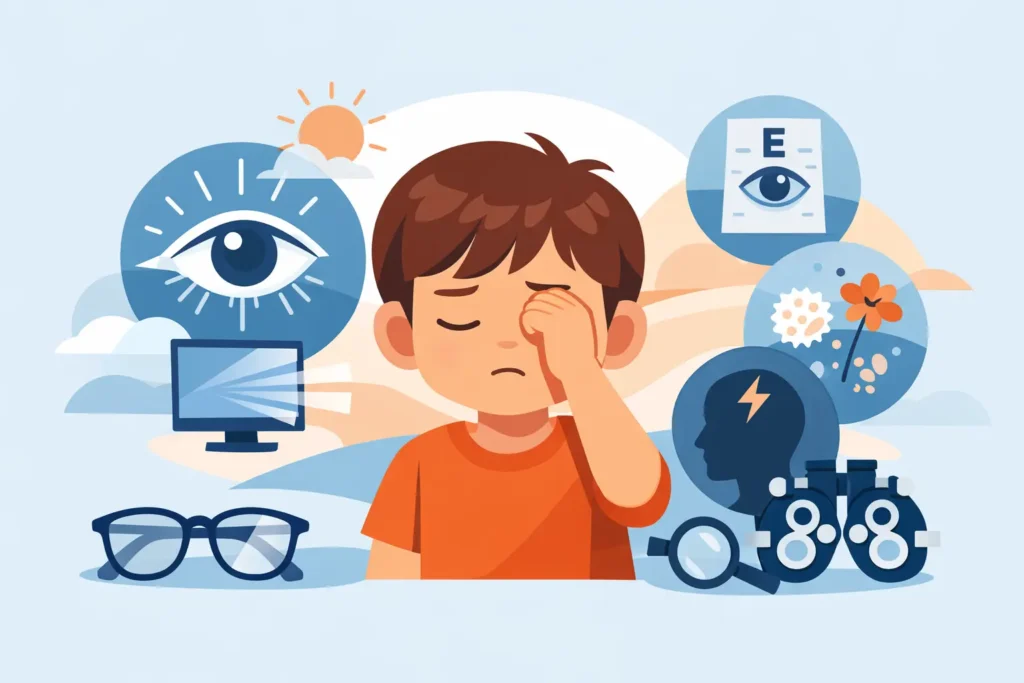
A child who narrows their eyes to see the TV, read a classroom board, spot a sign, or look at a tablet can make a parent pause and wonder, why does my child squint? Sometimes it is a brief response to bright light or tired eyes. Other times, squinting is a child’s quiet way of telling you that seeing clearly takes more effort than it should.
Children often do not have the words, awareness, or comparison point to explain that their vision feels blurry. They may simply move closer, lose their place while reading, rub their eyes, or squint. A comprehensive children’s eye exam can sort out the cause with care and give your family clear next steps.
Why Does My Child Squint?
Squinting reduces the amount of light entering the eye and temporarily changes how light is focused. In simple terms, it can create a small pinhole effect that makes a blurry image look a little sharper. That is why squinting is often associated with a refractive error, meaning the eyes need help focusing light precisely.
The most common possibilities include nearsightedness, farsightedness, and astigmatism. Nearsighted children may squint most when trying to see far away, such as a whiteboard, score display, road sign, or face across a room. Farsightedness can make near tasks more tiring, particularly reading or detailed schoolwork, although some children can compensate for a while by working their focusing system very hard. Astigmatism can blur vision at multiple distances and may lead to frequent squinting, headaches, or visual fatigue.
Squinting does not automatically mean your child needs glasses. Still, it is a useful clue, especially when it is new, frequent, or tied to particular activities. An exam helps distinguish a simple focusing concern from other eye health or eye coordination issues.
Common Reasons Children Squint
A vision prescription may be needed
A child may squint occasionally even with healthy eyes, but repeated squinting to make distant or near details clearer deserves attention. Vision changes can happen as children grow, and they may not realize their view is different from everyone else’s. They may assume that a fuzzy board at school or slightly doubled words on a page are normal.
Look for patterns. Does your child squint mostly outdoors or across a room? Does it happen during homework, drawing, gaming, or reading? Details like these are genuinely helpful during an eye exam because they point to when the visual system is under the most strain.
Bright light can be uncomfortable
Some children squint in bright sunshine, under fluorescent lights, or when moving between dim and bright spaces. Mild light sensitivity can be normal. However, persistent sensitivity, tearing, redness, eye pain, or avoidance of light can signal an issue worth checking promptly.
Bright light may also make an uncorrected prescription more noticeable. If your child squints outdoors and also struggles to recognize distant objects, the light itself may not be the only factor.
Eye fatigue or dry, irritated eyes
Long periods of close work can leave eyes tired, particularly when children are focused on screens, books, or detailed crafts. When we concentrate, we tend to blink less often. Less blinking can contribute to dryness and irritation, which may cause rubbing, blinking, watery eyes, or squinting.
Screens are not always the root cause, and they do not replace a careful assessment of vision. It depends on the child and the pattern of symptoms. Regular breaks, comfortable lighting, and time outdoors can support visual comfort, but frequent squinting should not be dismissed as just too much screen time.
The eyes may not be working together comfortably
Clear vision is about more than reading an eye chart. The eyes must also aim, focus, and work as a team. If those skills are under stress, a child may squint, close or cover one eye, tilt their head, lose their place while reading, or complain that print moves or looks tired.
These concerns are not always obvious in a basic screening. A comprehensive eye exam looks at how the eyes work together as well as how clearly your child sees. This fuller picture matters for comfortable learning, play, sports, and everyday confidence.
An eye health concern needs attention
Less commonly, squinting may occur alongside an eye health issue. Allergies, an eyelid problem, infection, injury, or inflammation can cause discomfort that makes a child want to narrow or protect the eye. In these cases, you may also see redness, discharge, swelling, excessive tearing, or complaints of pain.
Most cases of childhood squinting are not emergencies, but eye symptoms deserve a thoughtful response rather than guesswork. If something seems unusual to you, it is reasonable to have it checked.
Signs It Is Time to Schedule a Children’s Eye Exam
A child does not need to report blurry vision for an exam to be worthwhile. Parents and teachers are often the first to notice behaviors that suggest vision is affecting comfort or performance. Consider booking a comprehensive exam if squinting is frequent or if you notice several of these changes:
- Sitting unusually close to screens, books, or the classroom board
- Holding books very close, skipping lines, or avoiding reading
- Headaches after school or close-up tasks
- Frequent eye rubbing, blinking, watering, or complaints of tired eyes
- Covering one eye, closing one eye in sunlight, or turning the head to see
- Difficulty catching a ball, judging steps, or noticing distant details
- A sudden change in vision behavior, even if your child cannot explain it
Children can do very well academically and still have a vision concern. They are adaptable, and many work around a problem without realizing how much extra effort it requires. That is one reason routine eye care is so valuable: it can identify changes before they become a larger source of frustration.
When Squinting Needs Urgent Care
Call an eye care professional promptly if your child has sudden vision loss, severe eye pain, a significant eye injury, a chemical splash, new double vision, a very red eye with pain, or a pupil that looks unusual. Seek urgent medical care for a sudden drooping eyelid, a new eye turn, or squinting that begins with severe headache, vomiting, weakness, confusion, or other concerning symptoms.
Trust your instincts. A child who is in pain, cannot open an eye, or seems noticeably different after an injury should be assessed without waiting to see if it improves on its own.
What Happens at a Child’s Eye Exam?
A pediatric eye exam should feel encouraging, not intimidating. At 4 Eyes Optometry, the goal is to make eye care a positive and low-stress part of family health. The exam is adapted to your child’s age, communication style, and comfort level.
Your optometrist may check visual clarity at near and far distances, eye alignment and movement, focusing ability, depth perception, color vision when appropriate, and the overall health of the eyes. For some children, dilating drops may be recommended to give a more accurate measure of how their eyes focus and to allow a better view inside the eye. Your optometrist will explain what is being checked and why.
If glasses are recommended, the prescription is only one part of the conversation. Frame fit, lens options, durability, comfort, and your child’s activities all matter. A pair that feels good and stays in place is far more likely to be worn consistently.
What Parents Can Do Before the Appointment
Make a few notes about when you see the squinting. Is it more noticeable at school, during reading, in the car, outside, or near bedtime? Ask your child open questions, such as whether the board looks fuzzy, whether their eyes hurt, or whether words ever move around. Avoid turning it into a test. A calm conversation often brings out useful details.
If your child wears glasses, bring them to the appointment. Let the clinic know about headaches, medications, family history of eye conditions, recent injuries, and any concerns shared by a teacher. These details help create a personalized plan rather than a one-size-fits-all answer.
Squinting is often a small behavior with a meaningful message behind it. Paying attention early gives your child the chance to see, learn, play, and grow with greater ease – and gives you the reassurance of knowing their eyes are being cared for thoughtfully.