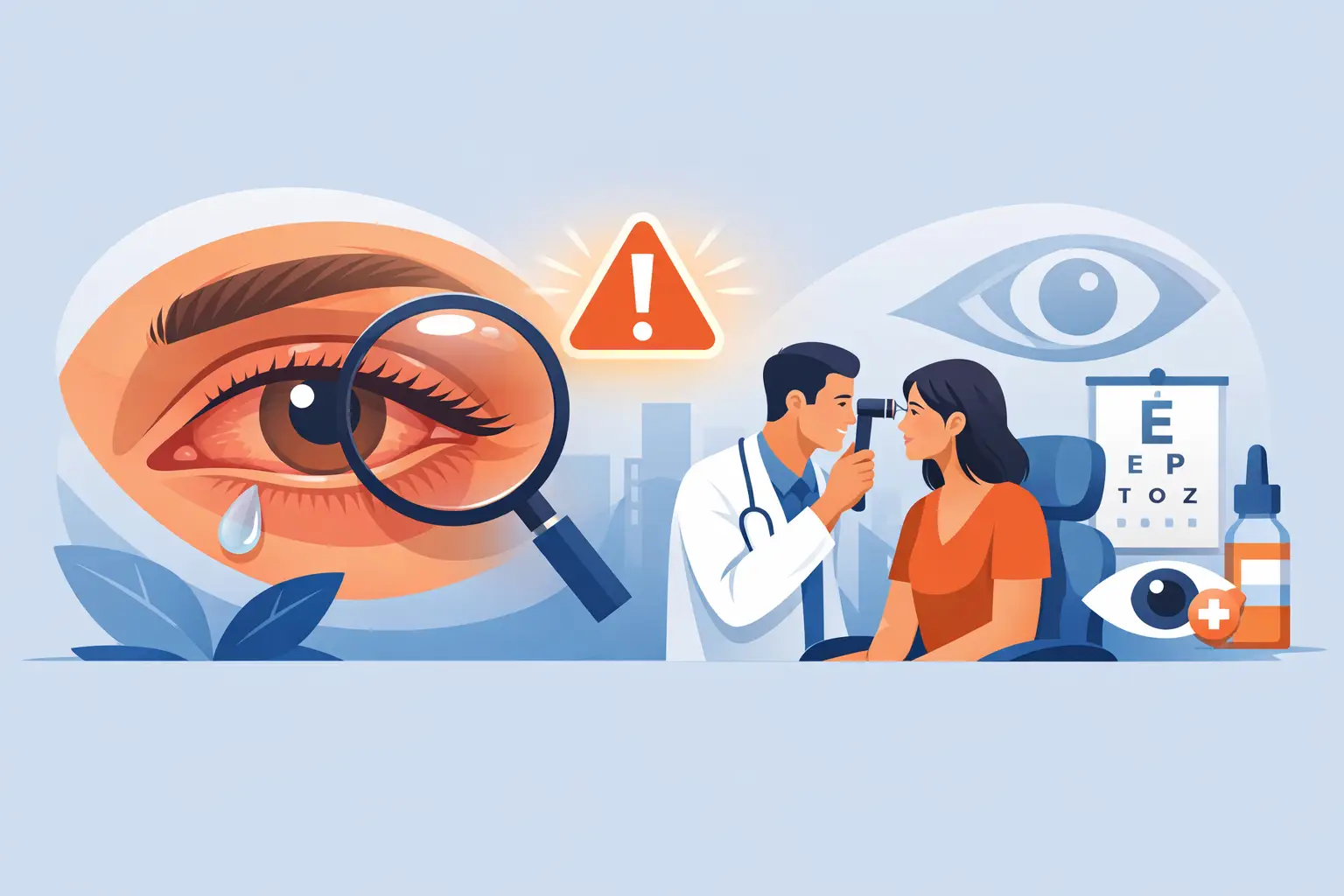
A red, sticky, irritated eye can turn an ordinary morning into a stressful one – especially when a child is due at school, you wear contact lenses, or you are unsure whether it is safe to be around others. Urgent eye care for pink eye can help you get clear answers quickly, protect your vision, and make a comfortable plan for the next few days.
Pink eye, also called conjunctivitis, is common, but it is not one single condition. Viruses, bacteria, allergies, contact lens irritation, and other eye problems can all cause redness. Because the symptoms can overlap, an eye exam is often the best way to determine what is going on and whether treatment is needed.
When pink eye needs same-day attention
Many cases of pink eye are uncomfortable but not dangerous. Still, certain symptoms deserve a same-day eye care appointment. Eye redness should not automatically be assumed to be simple conjunctivitis, particularly when symptoms are intense, appear suddenly, or affect vision.
Seek urgent evaluation if you have moderate or severe eye pain, light sensitivity, blurred or reduced vision, significant eyelid swelling, or a feeling that something is stuck in the eye that does not improve with blinking. Thick discharge, redness that is getting worse rather than better, or symptoms in a newborn also warrant prompt care.
Contact lens wearers should be especially cautious. A painful red eye in someone who wears contacts can occasionally signal a corneal infection, which needs timely treatment to reduce the risk of lasting damage. Remove your lenses right away and do not put them back in until an eye care professional says it is safe.
A chemical splash, eye injury, sudden vision loss, severe headache with nausea, or a noticeably irregular pupil calls for emergency medical care rather than waiting for a routine appointment. If a chemical gets in the eye, begin rinsing it with clean, lukewarm water immediately and continue flushing while arranging emergency help.
What can cause a red, irritated eye?
Viral conjunctivitis often starts in one eye and may move to the other. It can cause watery tearing, burning, redness, and a gritty sensation. It may arrive alongside a cold, sore throat, or other respiratory symptoms. Viral pink eye can spread easily through hands, towels, pillowcases, and shared cosmetics, but antibiotics do not treat viruses.
Bacterial conjunctivitis may produce thicker yellow or green discharge, crusted lashes, and eyelids that are difficult to open in the morning. It can be contagious, and some cases may benefit from prescription treatment. The amount of discharge alone does not provide a perfect diagnosis, though, which is why an exam matters.
Allergic conjunctivitis commonly affects both eyes and often brings intense itching, watery eyes, and puffiness. It may be triggered by pollen, pet dander, dust, or another irritant. Unlike infectious pink eye, allergies are not contagious. The right relief may involve avoiding the trigger, cool compresses, or appropriate allergy eye drops.
Dry eye, a blocked oil gland, a scratched cornea, or inflammation inside the eye can also create redness and discomfort. This is the reason a personalized assessment is more helpful than choosing drops based on appearance alone.
What happens during urgent eye care for pink eye?
A same-day visit should feel reassuring, not overwhelming. Your optometrist will ask when symptoms began, whether one or both eyes are involved, if you have been ill recently, and whether you wear contact lenses. Mention any eye injury, new eye product, recent swimming, sick contacts, or changes in vision.
The exam may include checking vision, looking closely at the eyelids and front of the eye, and using a microscope called a slit lamp. In some situations, a dye is used to look for a scratch or other problem on the cornea. These steps help distinguish common conjunctivitis from conditions that require different care.
Treatment depends on the cause. That may mean prescription medication, recommendations for soothing symptoms, guidance on managing allergies, or a referral for more urgent treatment when needed. There is a trade-off in treating every red eye as bacterial: unnecessary antibiotic drops may not help and can sometimes cause irritation or delay the right diagnosis. A careful exam supports treatment that fits your eyes rather than a one-size-fits-all approach.
What to do while you wait to be seen
Do not rub your eyes, even when they itch. Rubbing can increase irritation and can transfer infectious material from one eye to the other. Wash your hands often with soap and water, particularly before and after touching your face or applying eye medication.
A clean, cool compress can ease irritation and swelling. Use a fresh washcloth each time, and do not share it with anyone else. If crusting is present, gently soften it with clean warm water rather than picking at the lashes.
Pause contact lens use and eye makeup until you have been assessed and symptoms have resolved. Discard disposable lenses and the case used around the time symptoms began if your eye care provider recommends it. Replace eye makeup that may have been contaminated, especially mascara and eyeliner applied close to the lash line.
Avoid using someone else’s drops, leftover prescription drops, or redness-relief drops without professional advice. Some drops are not appropriate for certain eye conditions, and leftover medication may be expired or intended for a different problem. Artificial tears may feel soothing for some people, but they do not replace an exam when warning signs are present.
Keeping pink eye from moving through the household
For families, the hardest part is often preventing one irritated eye from becoming everyone else’s problem. Infection can spread through direct contact and items that touch the face. A few consistent habits make a meaningful difference:
- Wash hands thoroughly and often, including after helping a child clean around the eye.
- Keep towels, washcloths, pillowcases, makeup, and eye drops personal.
- Clean commonly touched surfaces such as faucets, phones, door handles, and remote controls.
- Encourage children to avoid touching their eyes and to tell an adult if their vision hurts, blurs, or feels different.
School, work, and child care policies vary. A child who feels well enough to participate may not always need to stay home, but active discharge, frequent eye rubbing, difficulty with hygiene, or a clinic’s treatment recommendations can change the decision. Ask your eye care provider for guidance based on the likely cause and your child’s setting.
A calm next step for a red eye
Pink eye is often manageable, but comfort should never require guessing. If redness comes with pain, light sensitivity, vision changes, contact lens wear, or worsening symptoms, arrange urgent care promptly. If the problem is milder but uncertain, an eye exam can still bring welcome peace of mind and a clear plan.
At 4 Eyes Optometry, urgent medical eye care is approached with the same attentive, relationship-focused care families expect from their regular visits. When your eyes are uncomfortable and the day already feels busy, timely guidance can help you focus on feeling better – and on keeping your family’s eyes healthy.