If you have ever wondered why getting contact lenses is more involved than picking a prescription and heading home, the answer is simple – your eyes deserve a personalized fit. The contact lens fitting process is designed to make sure your lenses feel comfortable, provide clear vision, and support long-term eye health, not just on day one, but every day you wear them.
For many patients, that is a relief to hear. Contacts can be a great option for sports, work, special events, or everyday convenience, but they are not one-size-fits-all. A proper fitting helps your optometrist match the lens to your eye shape, tear film, vision needs, and lifestyle so you leave with more confidence and fewer surprises.
Why the contact lens fitting process matters
A contact lens sits directly on the surface of your eye. That means even a small issue with fit, material, or wearing schedule can affect comfort, vision, and eye health. A lens that is too tight may feel dry or cause irritation. One that moves too much may blur your vision or become uncomfortable throughout the day.
This is why a contact lens fitting is not the same as a routine glasses prescription. Your glasses prescription helps determine lens power, but a contact lens fitting goes further. It evaluates how a specific lens behaves on your eyes and whether it works well with your daily routine.
The goal is not simply to help you see clearly. It is to help you wear contacts safely and comfortably in real life.
What happens before lenses are selected
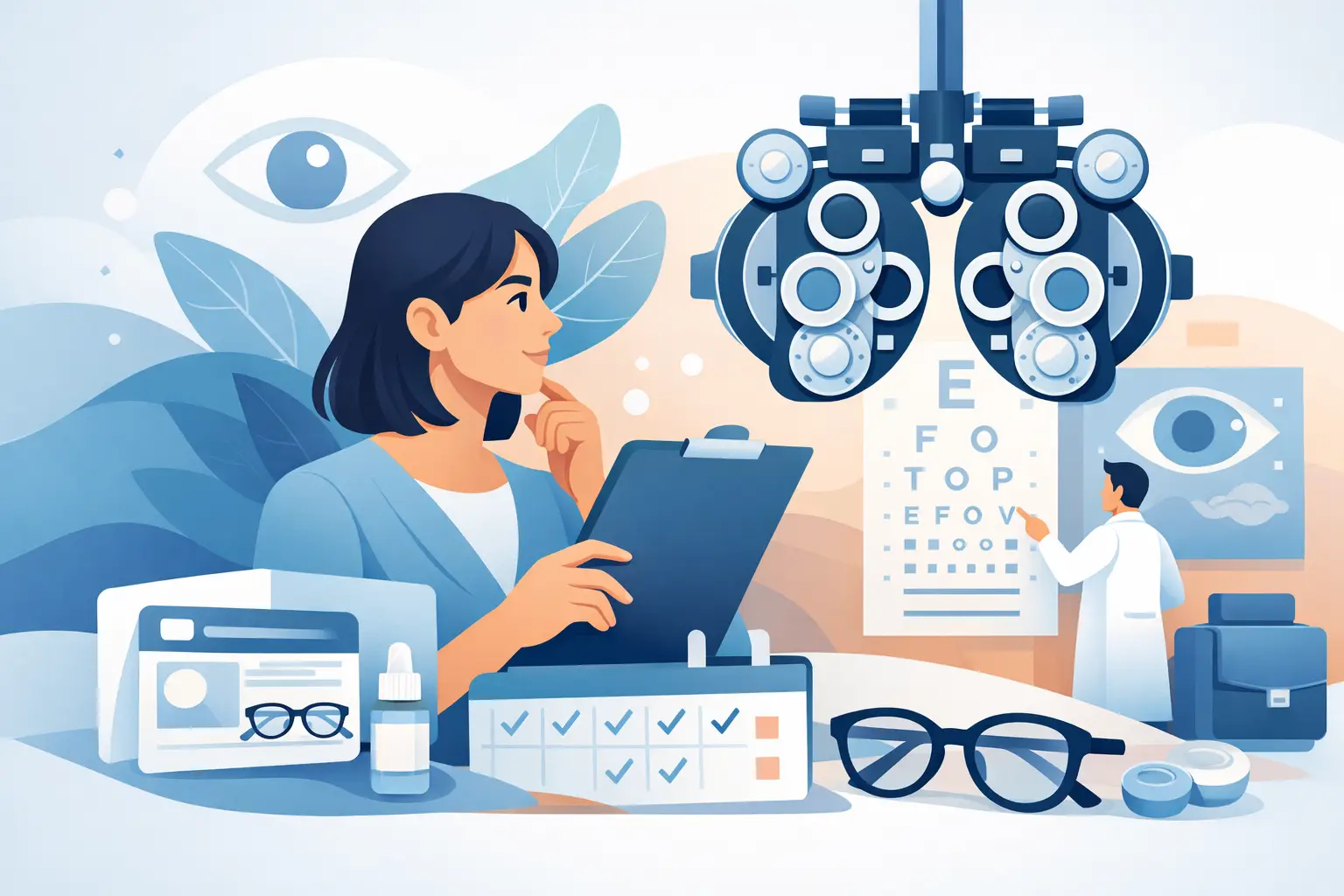
The process usually starts with a comprehensive eye exam. Your optometrist checks your vision, updates your prescription, and assesses the overall health of your eyes. This includes looking at the cornea, eyelids, tear film, and the front surface of the eye.
This step matters because some eye conditions can make contact lens wear more challenging. Dry eye, allergies, eyelid inflammation, or corneal irregularities do not always rule contacts out, but they may affect which lens type is best. In some cases, treating an underlying issue first leads to a much better experience.
Your lifestyle also plays a role. Someone who wants contacts for occasional social use may need a different plan than someone who hopes to wear them all day at work. Screen time, outdoor activities, sports, and sensitivity to dryness can all shape the recommendation.
Measuring your eyes for the right fit
Corneal shape and lens size
One of the most important parts of the contact lens fitting process is measuring the curvature of your cornea. Since contact lenses rest on the cornea, the lens has to match your eye closely enough to stay stable and comfortable.
Your optometrist may use specialized instruments to measure the front surface of your eye. These readings help guide decisions about base curve, diameter, and lens design. If your cornea has an unusual shape, standard soft lenses may not be the best option, and a specialty lens may be a better match.
Tear film and eye surface health
Comfort depends on more than shape. Your tear film helps keep contacts moist and wearable throughout the day. If your tears evaporate too quickly or your eyes are already irritated, some lenses may feel fine for an hour and frustrating by midafternoon.
That is why evaluating dryness is an important part of the fitting. In some cases, daily disposable lenses, different materials, or a lower wear time may be recommended. It depends on what your eyes need, not what is most common.
Trying on trial lenses
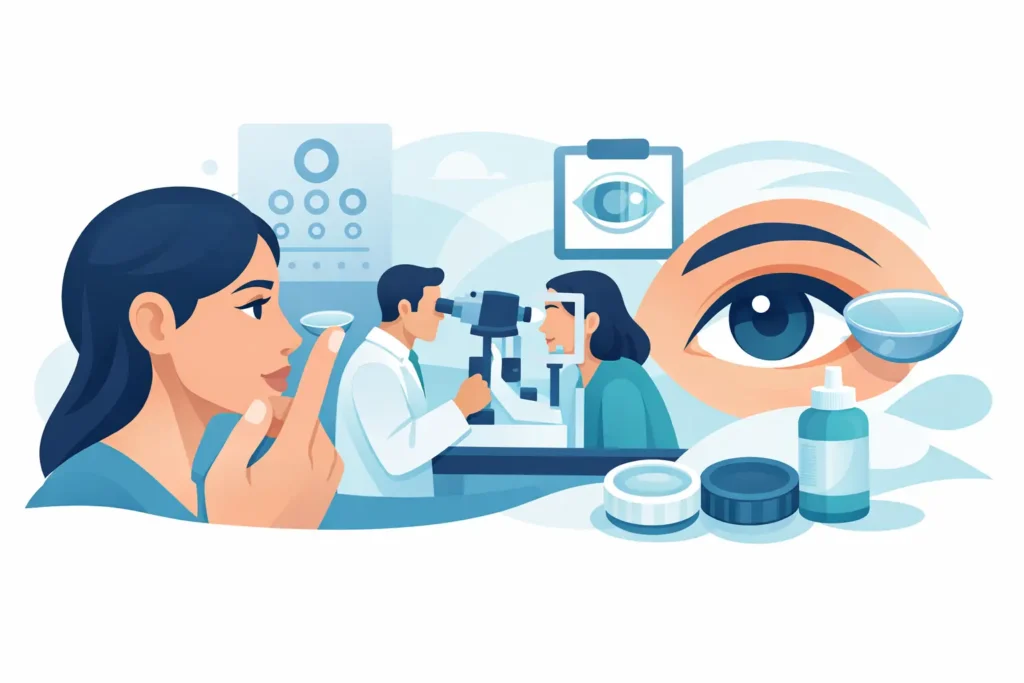
Once the initial measurements are done, trial lenses are usually placed on your eyes. This is where the fitting becomes practical. A lens may look right on paper but still need adjustment once it is actually on the eye.
Your optometrist checks several things at this stage. The lens should center well, move appropriately with each blink, and provide stable vision. You may be asked how the lenses feel right away, but comfort after a few minutes matters too. Some lenses settle differently after they have been on the eye for a short time.
Vision testing is repeated with the trial lenses in place. If needed, small prescription changes can be made. This is especially helpful for patients with astigmatism, multifocal needs, or prescriptions that are more sensitive to lens position.
Choosing the best type of contact lens
There is no single best lens for everyone. The right choice depends on your prescription, eye health, budget, and daily habits.
Soft contact lenses are the most common and work well for many patients. Daily disposables are popular because they are convenient and reduce buildup from repeated wear. Two-week and monthly lenses can also be a good fit for the right patient, especially when cleaning habits are consistent and the lens material suits the eye well.
If you have astigmatism, toric lenses may be recommended. If you need help seeing both near and far, multifocal contact lenses can be a great option. Patients with irregular corneas or more specialized needs may do better in rigid gas permeable or other specialty lenses.
There are trade-offs. Daily lenses offer convenience and often excellent comfort, but they may cost more over time. Monthly lenses can be more economical, but they require careful cleaning and replacement. Multifocal lenses can reduce dependence on reading glasses, but some patients notice visual compromises in certain lighting. The best plan is the one that fits both your eyes and your life.
Learning how to put in and remove lenses
For first-time wearers, this is often the part that feels most intimidating. The good news is that it gets easier quickly with the right support.
During your fitting, you will be shown how to insert and remove your lenses safely. You will also learn how to clean and store them if you are not using daily disposables. Good hygiene is a big part of successful contact lens wear, and simple habits make a real difference.
You will also be told how long to wear your lenses each day, whether you should build up wear time gradually, and what symptoms should prompt a call to the office. Redness, pain, light sensitivity, or blurred vision should never be ignored.
A calm, patient teaching session matters here. Many people need a little practice before they feel comfortable, and that is completely normal.
Why follow-up visits are part of the process
The first fit is not always the final fit
One of the most overlooked parts of the contact lens fitting process is the follow-up visit. Even if your lenses feel good at first, your optometrist still wants to see how they perform after real-world wear.
At your follow-up, the lens fit is checked again, along with your vision and the health of the eye surface. You can talk through any dryness, blur, discomfort, or handling issues you noticed at home. Sometimes the first lens chosen is exactly right. Sometimes a small change makes things much better.
Ongoing care keeps contact lens wear safer
Contact lens prescriptions should be reviewed regularly because your eyes and vision can change over time. A lens that worked well a few years ago may no longer be the best option if dryness, allergies, or vision needs have shifted.
Regular care also helps catch early signs of problems before they become bigger issues. That kind of proactive support is especially valuable for busy adults, growing kids, and anyone who wants their eye care to feel straightforward and dependable.
Common questions patients have
Many patients ask whether contact lens fittings take longer than a regular exam. Usually, yes, because there are extra measurements, trial lenses, and teaching involved. The exact timing depends on whether you are new to contacts, need specialty lenses, or have dry eye or other factors that require a more customized approach.
Another common question is whether glasses are still needed. In many cases, yes. Even happy contact lens wearers benefit from having an up-to-date pair of glasses for rest days, illness, or late nights when contacts are no longer comfortable.
Parents also often ask whether children or teens can wear contacts. Sometimes they can, and sometimes waiting is the better choice. Maturity, hygiene habits, motivation, and eye health all matter more than age alone.
A better fit feels different
When contact lenses are fitted well, most people notice it right away. Vision feels stable. Comfort lasts longer. The lenses become part of your day instead of the thing you keep thinking about.
That is the real value of a careful, personalized fitting. It turns contacts from a guess into a plan. And when your care is built around your eyes, your routine, and your comfort, wearing contact lenses can feel much simpler than you expected.
If you are considering contacts for the first time or returning after a break, it helps to start with a clinic that takes the time to get the fit right. At 4 Eyes Optometry, that means care that is thorough, welcoming, and focused on what will work best for you long after the appointment ends.