A sudden shower of black specks while you are reading, driving, or stepping outside into bright light can be unsettling. If you are wondering when are flashes and floaters urgent, the short answer is this: new symptoms, a sudden increase, or flashes and floaters that come with vision loss should be checked right away.
Some floaters are harmless and common with age. Some flashes happen as the gel inside the eye changes over time. But there are moments when these symptoms shift from annoying to time-sensitive, and knowing the difference can help protect your sight.
When are flashes and floaters urgent?
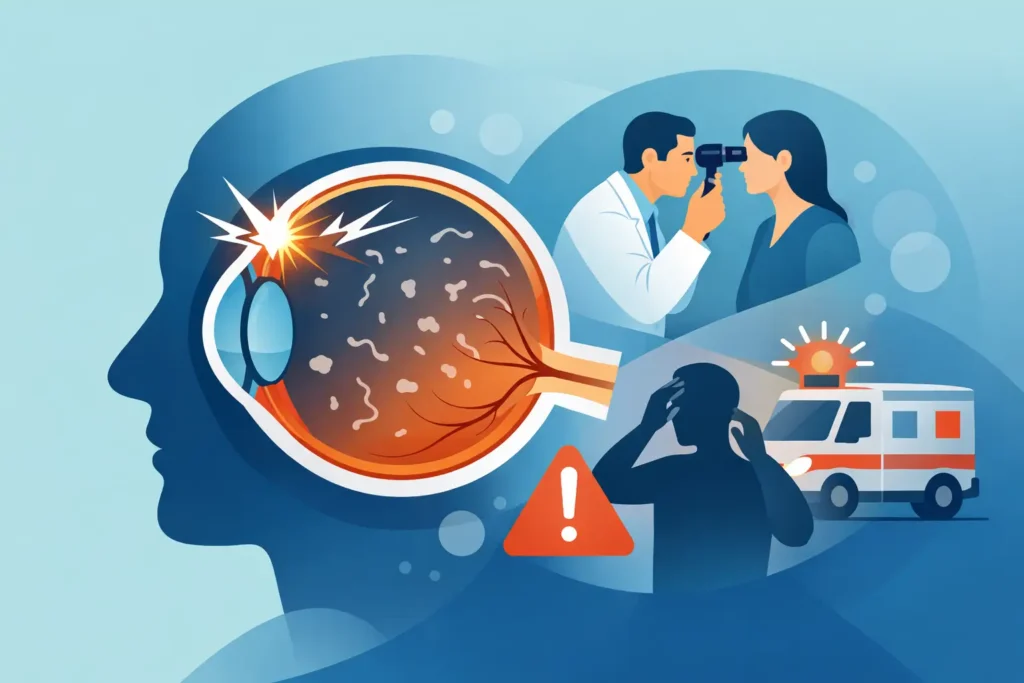
Flashes and floaters are urgent when they appear suddenly, become much more noticeable over a short period, or show up with other warning signs. The biggest concern is a retinal tear or retinal detachment. Those conditions need prompt medical attention because the retina is the light-sensitive tissue at the back of the eye, and damage there can affect vision permanently if treatment is delayed.
A small, stable floater that has been there for months is usually less concerning than a burst of new floaters that started today. The same is true for an occasional flash in the dark compared with repeated flashes that feel new or stronger than usual.
The symptoms that deserve urgent attention include a sudden increase in floaters, flashes of light in one or both eyes, a shadow or curtain over part of your vision, blurred or reduced vision, or symptoms after an eye injury. If you notice any of these, it is best not to wait and see if they settle down on their own.
Why flashes and floaters happen
Inside the eye is a clear, gel-like substance called the vitreous. As we get older, that gel naturally changes. It becomes more liquid and can pull away from the retina. This is called a posterior vitreous detachment, and it is a common reason people notice new floaters or quick flashes of light.
In many cases, this change is not dangerous. The problem is that sometimes the vitreous tugs hard enough to create a retinal tear. If fluid passes through that tear, the retina can start to detach. That is why new flashes and floaters should never be brushed off without an eye exam.
It is also worth knowing that not every floater comes from aging alone. Nearsightedness, diabetes, inflammation in the eye, previous eye surgery, and trauma can all raise concern depending on the situation.
Symptoms that should not wait
There is a difference between noticing a few familiar floaters on a sunny day and having a sudden change that feels clearly out of the ordinary. The urgent symptoms are usually noticeable because they feel abrupt, new, or paired with a drop in vision.
A few examples can help. If you suddenly see many dark dots, cobwebs, or squiggly shapes that were not there before, that is worth urgent assessment. If brief flashes appear off to the side, especially in dim light, that can also suggest vitreous traction on the retina. If part of your vision looks blocked by a gray curtain, dark veil, or shadow, that is more concerning still.
Reduced side vision, blurry vision that is not improving, or the sense that something is covering part of what you see should be treated as urgent. The same applies if symptoms follow a fall, sports injury, or any blow to the eye or head.
When symptoms may be less urgent
Not every floater means an emergency. Many people develop a few mild floaters over time, especially after age 40. They may look like spots, threads, or transparent wisps that drift when the eye moves. If they have been stable for a long time and there are no flashes, no vision loss, and no sudden increase, the situation is often less urgent.
That said, less urgent does not mean ignore it forever. Even non-emergency symptoms still deserve an eye exam, especially if they are new to you. The challenge is that patients cannot reliably tell from symptoms alone whether the retina is being affected. A dilated retinal exam is what gives a clear answer.
Who may be at higher risk
Some people should be especially careful with new flashes and floaters because their risk of retinal problems is higher. This includes people who are very nearsighted, have had cataract surgery, have a history of retinal tears or detachment, or have a family history of retinal detachment.
People with diabetes or inflammatory eye conditions may also need closer evaluation depending on the symptoms. Even if you are generally healthy, a sudden change is still worth prompt attention. Risk factors matter, but they do not replace the need to act when symptoms are new or worsening.
What happens during an urgent eye exam
One reason people delay care is uncertainty about what the visit will involve. Usually, the exam is straightforward. Your optometrist will ask when the symptoms started, whether they are getting worse, and whether you have any missing vision, trauma, or recent surgery. Your vision and eye pressure may be checked, and your pupils will likely be dilated so the retina can be examined thoroughly.
Dilation is important because it allows a much better view of the back of the eye. If there is a tear, bleeding, or retinal detachment, it needs to be identified as early as possible. If everything looks stable, that peace of mind matters too. You may still need follow-up, because some retinal problems can appear after the initial onset of symptoms.
Why waiting can be risky
People sometimes hope flashes and floaters will just pass. Sometimes they do become less noticeable, but that is not a safe way to judge whether the eye is healthy. A retinal tear can begin with symptoms that seem manageable. A detachment can progress from a small area to a larger one.
Timing matters. Early treatment for a retinal tear can help prevent a full retinal detachment. Once central vision is affected, recovery may be more limited, even with treatment. That is why prompt evaluation is about preserving options, not creating alarm.
What to do if you notice them
If you have a sudden onset of flashes or floaters, call an eye care provider the same day and explain exactly what changed. Mention whether there is any curtain, shadow, side vision loss, blur, or recent injury. Those details help determine how quickly you should be seen.
If symptoms are severe, rapidly worsening, or paired with significant vision loss, seek emergency medical eye care immediately. If the symptoms are mild but new, do not put off an exam for weeks. It is always better to have a careful retinal check than to guess.
For families and busy adults, this can feel inconvenient, especially if the symptoms come and go. Still, eye symptoms do not always follow a predictable pattern. If something feels new enough to make you pause, that instinct is worth listening to.
When are flashes and floaters urgent for older adults?
Older adults commonly notice floaters as part of normal aging, so it can be tempting to assume every new spot is harmless. But when are flashes and floaters urgent in seniors? The answer is the same as for everyone else: when they are sudden, increasing, or associated with a shadow, missing vision, or blur.
Because age-related changes in the vitreous are more common over time, new symptoms should be evaluated rather than self-diagnosed. The reassuring news is that many cases turn out not to be emergencies. The key is getting the right exam so you know which situation you are dealing with.
At 4 Eyes Optometry, we believe medical eye care should feel both thorough and reassuring. If something changes in your vision, you deserve clear guidance, careful attention, and a plan that helps you feel looked after.
A new floater may be nothing serious. A sudden wave of them, especially with flashes or a shadow in your vision, is different. When your eyes send up a warning flag, it is always worth getting it checked.