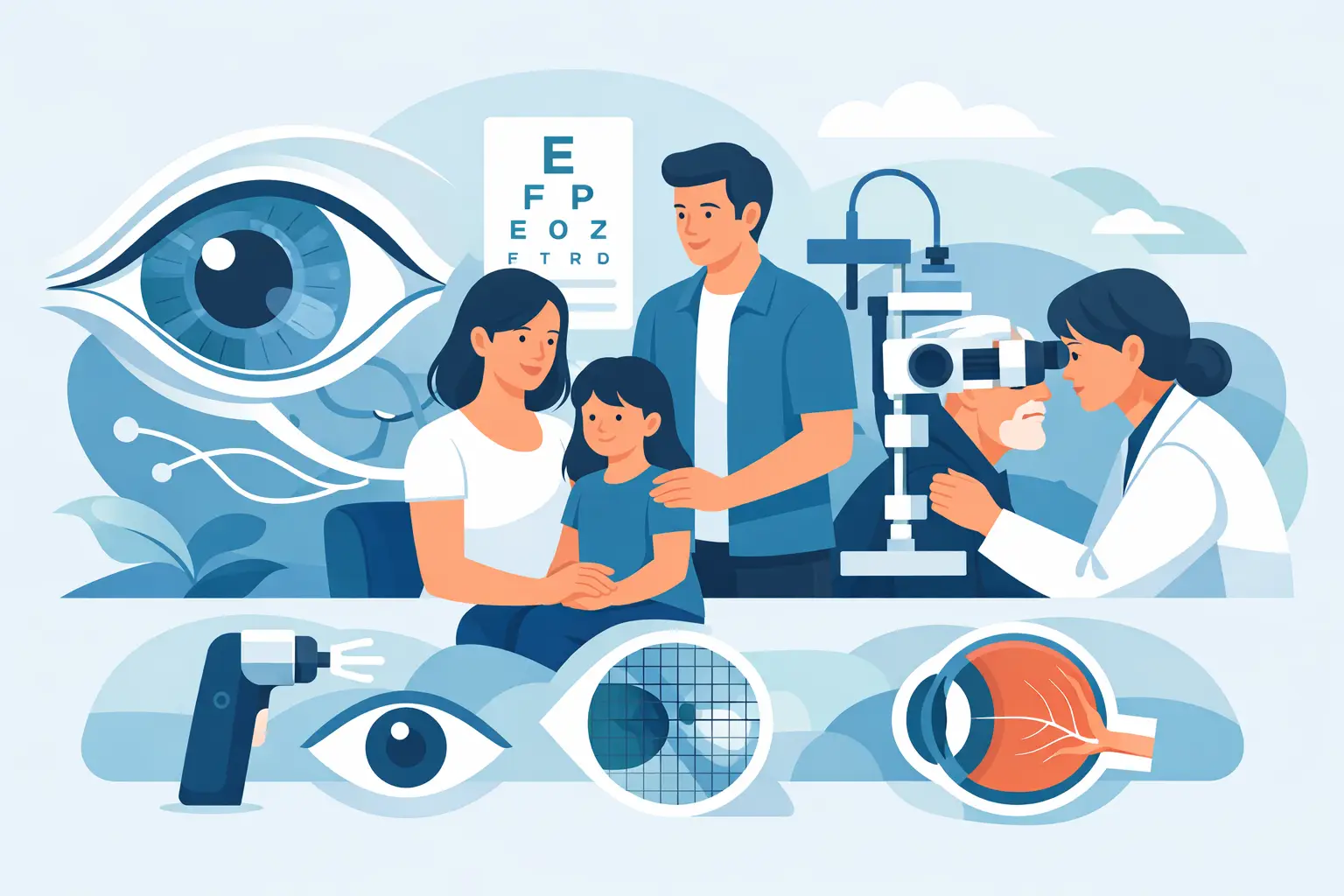

A lot of people assume an eye exam is mainly about reading letters on a chart and updating glasses. That is only part of the picture. If you have ever wondered what is comprehensive dilated eye exam, the short answer is this: it is a thorough eye health and vision evaluation that includes special drops to widen your pupils so your optometrist can see more of the inside of your eyes.
That extra view matters. Many eye conditions begin quietly, with little to no early warning signs. A comprehensive dilated eye exam gives your optometrist a better look at structures that cannot be fully evaluated through a basic vision screening alone. It is one of the most helpful ways to catch concerns early, often before they affect how well you see.
What Is a Comprehensive Dilated Eye Exam?
A comprehensive dilated eye exam is a full assessment of both your vision and your eye health. It goes beyond checking whether you need glasses or contacts. During the exam, your optometrist evaluates how your eyes focus, how they work together, and whether there are signs of disease, injury, or age-related changes.
The dilated portion means eye drops are used to make your pupils larger for a short time. When the pupils are widened, more light enters the eye and your optometrist can examine the retina, optic nerve, blood vessels, and macula more clearly. These are all important parts of the eye that can reveal early signs of glaucoma, diabetic eye disease, macular degeneration, retinal tears, and other concerns.
This is why a comprehensive dilated exam is different from a school vision screening, a quick online vision test, or a basic prescription check. Those may tell you whether your sight is blurry. They do not replace a medical assessment of your eye health.
Why Dilation Matters
Some patients hesitate when they hear the word dilation because they expect it to be uncomfortable or inconvenient. The truth is that the drops usually sting only briefly, and the effects wear off with time. For many people, the benefit of a clearer view inside the eye far outweighs the temporary blur and light sensitivity.
Dilation gives your optometrist a wider, deeper look at the back of the eye. Without it, subtle changes can be harder to detect. In some cases, imaging technology may also be used to support the exam, but dilation still plays an important role in many visits because it allows direct examination of the internal eye structures.
It is not always needed at every single appointment for every patient. Age, symptoms, medical history, medications, and risk factors all influence that decision. If you have diabetes, high blood pressure, flashes or floaters, a family history of eye disease, or new changes in vision, dilation becomes especially valuable.
What Happens During the Exam
A comprehensive dilated eye exam is typically straightforward and low stress. The exact flow can vary a little from clinic to clinic, but most visits include several parts designed to build a complete picture of your vision and eye health.
Your appointment often begins with a conversation. Your optometrist or a team member will ask about vision changes, eye comfort, headaches, medications, overall health, and family history. This part matters more than people realize. Symptoms that seem minor, like dry eyes at the end of the day or trouble driving at night, can provide useful clues.
Next comes vision testing. This may include checking how clearly you see at distance and up close, measuring your prescription, and evaluating how well your eyes work together. If you wear glasses or contact lenses, your current prescription and fit may also be reviewed.
Your eye pressure may be measured as part of glaucoma screening. The front of the eye is then examined to look at areas such as the cornea, iris, and lens. After that, if dilation is recommended, drops are placed in the eyes and given time to work.
Once the pupils are dilated, your optometrist examines the back of the eyes in more detail. This is the part that helps identify signs of retinal disease, optic nerve changes, bleeding, swelling, or other issues that can affect both sight and overall health.
What Does Dilation Feel Like?
For most people, dilation is more annoying than uncomfortable. The drops may cause a brief sting. After that, your near vision may become blurry for a few hours, and bright light may feel stronger than usual. Many patients do well with sunglasses after the appointment.
How long the effects last depends on the type of drops used and how your eyes respond. Some people feel back to normal fairly quickly, while others notice blur for several hours. It can be harder to read small print, use a phone, or do close-up work right away.
Driving after dilation depends on the individual. Some patients are comfortable driving, while others prefer to arrange a ride, especially if they are very light sensitive or have never been dilated before. If you are unsure, it is always reasonable to ask ahead of time.
What Can a Comprehensive Dilated Eye Exam Detect?
One of the biggest benefits of a comprehensive dilated exam is that it can reveal problems before they become obvious. Many eye diseases are easier to manage when found early.
Your optometrist may be looking for signs of glaucoma, cataracts, macular degeneration, diabetic retinopathy, retinal holes or tears, and changes related to high blood pressure. The exam can also help explain symptoms such as blurry vision, double vision, eye strain, floaters, flashes of light, or sudden vision changes.
Sometimes the eyes show signs of broader health issues too. Blood vessel changes, inflammation, or optic nerve findings can point to concerns that deserve medical follow-up beyond the eye clinic. That is one reason routine care can be so valuable even when your vision seems fine.
Who Should Have One?
In general, children, adults, and seniors can all benefit from comprehensive eye care, but the timing and frequency depend on age, symptoms, and risk level. If you already wear glasses or contacts, it is easy to assume the main goal is prescription updates. In reality, eye health monitoring is just as important.
Adults with diabetes, high blood pressure, autoimmune disease, or a family history of glaucoma or retinal disease often need especially careful follow-up. Seniors may need closer monitoring for age-related conditions. Children may also need comprehensive exams, particularly if they are squinting, struggling in school, getting headaches, or avoiding reading.
If you notice flashes, new floaters, a curtain-like shadow, sudden vision loss, eye pain, or redness with light sensitivity, do not wait for a routine visit. Those symptoms can require urgent medical eye care.
How Often Should You Schedule a Dilated Exam?
There is no one-size-fits-all answer. Some people need dilation regularly, while others may not need it at every visit. Your optometrist will recommend a schedule based on your age, current eye health, medical history, and risk factors.
For healthy adults, routine comprehensive exams are still a smart part of preventive care. If you have a known condition or are at higher risk for eye disease, more frequent monitoring may be advised. This is where personalized care makes a difference. The best schedule is the one that matches your eyes, not a generic rule.
Why a Comprehensive Exam Is Worth More Than a Quick Screening
Quick screenings can be useful for catching obvious vision problems, but they are not designed to replace full eye care. A comprehensive dilated eye exam gives your optometrist the chance to understand not just how you see today, but what may be changing quietly in the background.
That matters for busy parents, working adults, and older patients alike. When care is proactive instead of reactive, you have a better chance of protecting long-term vision and avoiding surprises. At a relationship-focused clinic like 4 Eyes Optometry, that also means your recommendations can be tailored to your daily life, whether you are managing screen time, night driving, dry eye symptoms, or changes that come with age.
A good eye exam should leave you feeling informed, cared for, and clear on what comes next. If it has been a while since your last visit, or if you have been putting off dilation because it sounds inconvenient, it may help to think of it as a simple step that gives your optometrist a much fuller picture of your health. Your eyes do a lot for you every day. Giving them a thorough check is a small commitment with lasting value.